
por Álvaro André Zeini Cruz
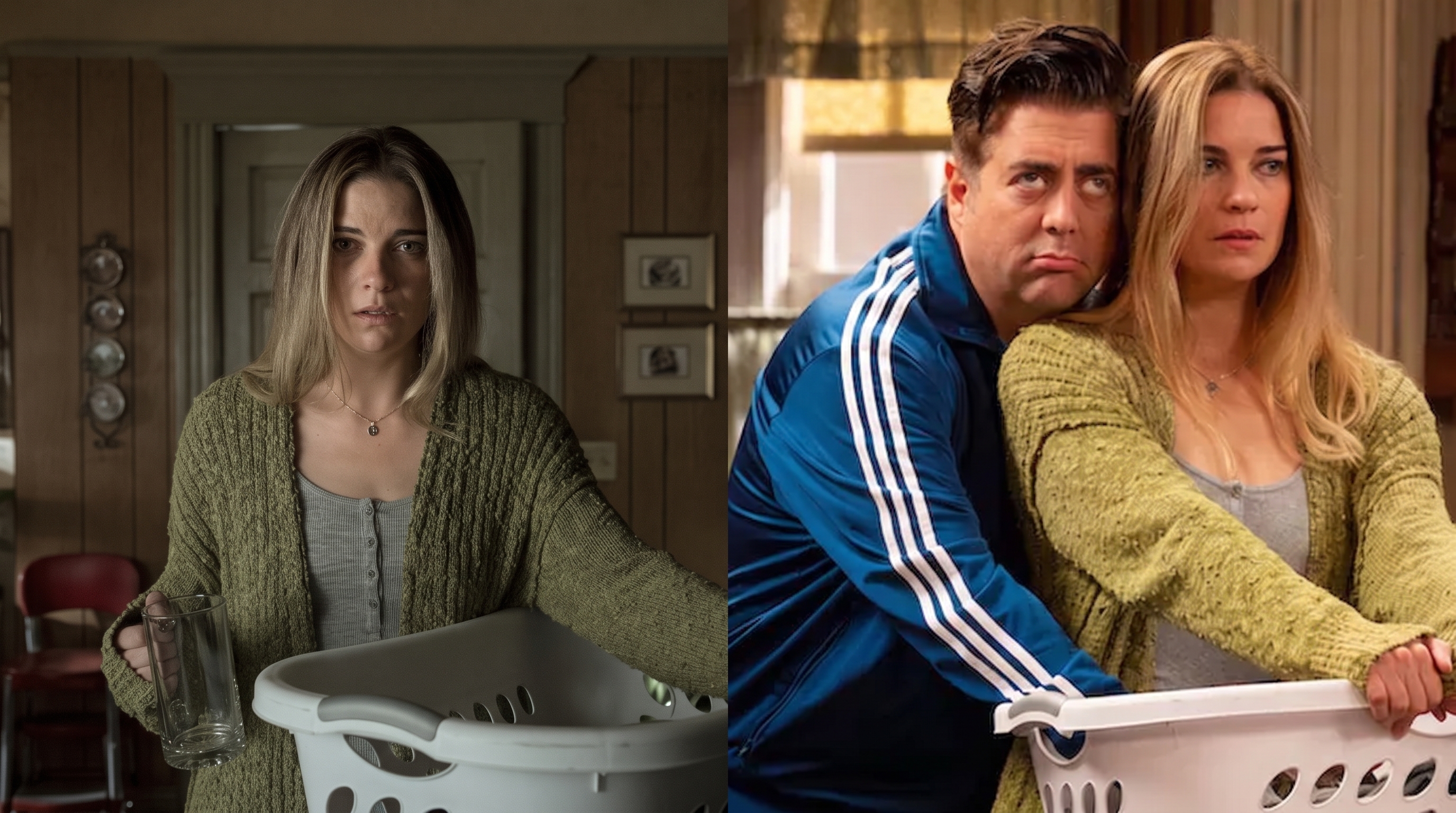
Com a mesma discrição com que chegou, Kevin Can F**k Himself caiu fora do Prime Video. O piloto, há alguns anos, compõe minhas aulas de direção televisiva, mas só terminei de ver a série agora, sob o aviso prévio da exclusão. Quer dizer, vi até onde foi possível, já que o sitdrama foi desalojado sem que a sua segunda (e última) temporada chegasse ao streaming. Sitdrama? Atrevo-me ao neologismo que, inclusive, explica o porquê de essa original da AMC ser tão pertinente à discussão da direção.
Historicamente, a televisão estadunidense definiu dramas como séries de uma hora, filmadas em película, e comédias como produções com duração de meia hora, gravadas em videotape. A curta duração episódica — cerca de 21 minutos de arte — acabou forjando o termo sitcom, uma vez que, normalmente, uma situação desdobrava todo o conflito daquele episódio. Ah, sim, oriundas do registro mais barato e fotograficamente mais pobre do VT, elas eram gravadas no que chamamos de multicâmera, com câmeras dispostas em semicírculo captando as cenas como se estivessem diante de um palco — ou seja, os atores dão o tempo da ação e os câmeras e o diretor de corte que se virem.
O dinamismo do multicâmera acabou corroborando um certo tempo da comédia, assim como uma espacialidade mais arejada. O sistema, no entanto, desprendeu-se da comédia com a chegada de uma tal — e genial — Arrested Development. Com a emergência dos streamings, as coisas se embaralharam ainda mais: a comédia não só abraçou a câmera única (antes restrita aos dramas), sobretudo numa estilística mockumentary, como ainda se aproveitou do fim do monopólio da grade de programação linear para extrapolar os 20 e poucos minutos.
É nesse contexto que Kevin Can F**k Himself revisita a sitcom lançando um olhar ácido sobre um traço recorrente ao gênero — o machismo. O título, aliás, é uma referência à série Kevin Can Wait, protagonizada por Kevin James, que antes já havia estrelado outro título habitado por homens estúpidos, The King of Queens. É a partir da casa colorida, acolhedora e rasa que a série se inicia, apresentando Allison (Annie Murphy) e Kevin (Eric Petersen), uma espécie de Peter Griffin (de Family Guy) de carne e osso.
Não demora, no entanto, para que a série explicite seu funcionamento: quando Allison se desvencilha do marido e de seus companheiros idiotas para apanhar algo na cozinha, a atmosfera se transforma brusca e brutalmente. A sala de estar, micro Magic Kingdom de um Homer Simpson, dá lugar a uma cozinha sombreada e cavernosa (acentuada, em determinado momento, pela conjunção vertiginosa entre zoom e dolly), captada não pela superfície lisa do vídeo, predominante até então, mas por uma fotografia árida e bolorenta, que, se por um lado livra Allison das más companhias, por outro revela violentamente sua solidão. A porta da geladeira — eletrodoméstico pivô de conflito em I Love Lucy — guarda a foto e o sonho de uma nova casa, mas cospe também uma barata que, entre Kafka e Clarice, desperta em Allison uma espécie de epifania quando esmagada. Que vidinha medíocre, parece pensar a protagonista, seja na multicâmera, seja na câmera única.
A barata morta é o germe silencioso e simbólico da ideia que comove Allison ao longo da temporada — assassinar o marido. Abre-se, então, uma trama à la Good Girls, com Allison encontrando em Patty (Mary Hollis Inboden), inicialmente amiga do marido, uma aliada nesse plano, que escorrega no trato com traficantes e em outras derrapadas rocambolescas. Contudo, nada no nível da trama representa tão bem a angústia dessa vivência quanto a fricção entre estilos, dada em cortes secos que transmutam um ambiente à la Friends — luz de grid, alto potencial de reflexão — numa atmosfera de Sopranos, Six Feet Under ou Breaking Bad.
Dividido em dois restaurantes, o sexto episódio tem Kevin transitando entre um jantar supostamente chique e romântico com Allison e uma lanchonete tipo Chuck E. Cheese. O segundo espaço permanece estável, mas, no restaurante, personagens que até então estavam atrelados ao drama de Allison são lançados à comédia farsesca na presença de Kevin, exigindo desses atores uma volta no parafuso da interpretação. A situação de uma competição de comida escala a um engasgo, que culmina com Kevin expelindo um naco de carne em Allison; uma humilhação embalada no overacting e nas claques. Quando Kevin sai de cena, a alegoria dá lugar ao realismo, e a voz de uma personagem feminina se dirige a Allison com uma preocupação natural e desconcertante — “are you okay, dear?”.
É antes pelos sentidos em sua assimilação bruta do que pela cognição que Kevin Can F**k Himself nos fode (com o perdão do trocadilho). A experiência de sentir o olhar ser lançado sem sobreaviso entre estéticas contraditórias logo deixa de significar surpresa para se tornar uma angústia apreensiva, passando depois a um estado de exaustão. Afinal, não há lugar seguro: o escapismo histórico do multicâmera nos lança numa espécie de episódio infernal de Everybody Loves Raymond (que é basicamente todo o conceito de The King of Queens); por outro lado, a câmera única rasga toda a fantasia desse outro mundo, revelando verdades nuas, cruas e incômodas. De um lado, a angústia pelo excesso da fantasia; do outro, pela completa falta dela. Em sua epistemofilia, Allison nos conduz da empatia por sua aflição social ao compartilhamento de uma inquietação existencial: existimos mediocremente, é o que nos mostra, entre-imagens, Kevin Can F**k Himself. Quem sabe um dia vejamos a segunda temporada.
Kevin Can F**k Himself
By Álvaro André Zeini Cruz
With the same discretion with which it arrived, Kevin Can F**k Himself quietly disappeared from Prime Video. The pilot has been part of my TV directing classes for a few years now, but I only just finished watching the series, prompted by the notice of its removal. That is, I watched as much as I could, since the sitdrama was pulled before its second (and final) season ever made it to streaming. Sitdrama? I’ll allow myself this neologism, which also explains why this AMC original is so relevant to a discussion of directing.
Historically, American television defined dramas as hour-long series shot on film, and comedies as half-hour productions recorded on videotape. The short episodic runtime — about 21 minutes of actual content — ended up giving rise to the term sitcom, since a single situation would usually play out the entire conflict of that episode. And yes, coming from videotape’s cheaper, visually poorer register, they were shot using what we call multi-camera, with cameras arranged in a semicircle capturing scenes as if in front of a stage — meaning the actors set the pace of the action, and the camera operators and editor have to keep up.
The dynamism of multi-camera ended up cementing a certain comedic rhythm, as well as a more open sense of space. The system, however, broke away from comedy with the arrival of a certain — and brilliant — Arrested Development. With the rise of streaming, things got even more scrambled: comedy not only embraced the single-camera format (previously reserved for dramas), especially in a mockumentary style, but also took advantage of the end of linear programming’s monopoly to stretch past the usual 20-odd minutes.
It’s in this context that Kevin Can F**k Himself revisits the sitcom, casting a sharp eye on a trait recurrent to the genre — machismo. The title, incidentally, is a reference to the show Kevin Can Wait, starring Kevin James, who had previously headlined another show populated by dim-witted men, The King of Queens. The series opens in the colorful, welcoming, shallow house, introducing Allison (Annie Murphy) and Kevin (Eric Petersen), a flesh-and-blood version of sorts of Peter Griffin (from Family Guy).
It doesn’t take long, though, for the show to reveal how it works: when Allison breaks away from her husband and his idiot buddies to grab something in the kitchen, the atmosphere shifts abruptly and brutally. The living room, a micro Magic Kingdom fit for a Homer Simpson, gives way to a shadowy, cavernous kitchen (heightened, at one point, by a dizzying combination of zoom and dolly), captured not by the smooth surface of video, dominant up to that point, but by a dry, moldy cinematography that, while it frees Allison from bad company, also violently exposes her loneliness. The fridge door — the appliance at the center of conflict in I Love Lucy — holds the photo and dream of a new house, but it also spits out a cockroach that, somewhere between Kafka and Clarice Lispector, sparks a kind of epiphany in Allison when she crushes it. What a pathetic little life, the protagonist seems to think, whether in multi-camera or single-camera mode.
The dead cockroach is the silent, symbolic seed of the idea that consumes Allison throughout the season — killing her husband. This opens up a plot in the vein of Good Girls, with Allison finding an ally in Patty (Mary Hollis Inboden), initially her husband’s friend, in this scheme, which stumbles into dealings with drug dealers and other far-fetched missteps. Still, nothing at the plot level captures the anguish of this experience as well as the friction between styles, delivered through sharp cuts that transform a Friends-like setting — grid lighting, high potential for reflection — into the atmosphere of The Sopranos, Six Feet Under, or Breaking Bad.
Split between two restaurants, the sixth episode has Kevin moving between a supposedly fancy, romantic dinner with Allison and a Chuck E. Cheese-style diner. The second setting stays stable, but at the restaurant, characters who until then had been tied to Allison’s drama are thrown into farcical comedy in Kevin’s presence, forcing those actors to crank up their performances a notch. A food-eating contest escalates into a choking incident, culminating in Kevin spitting out a chunk of meat onto Allison — a humiliation wrapped in overacting and canned laughter. When Kevin exits the scene, the allegory gives way to realism, and the voice of a female character addresses Allison with a natural, unsettling concern — “Are you okay, dear?”
It’s through the senses, in their raw assimilation, more than through cognition, that Kevin Can F**k Himself screws us over (pun intended). The experience of having one’s gaze thrown, without warning, between contradictory aesthetics quickly stops feeling like surprise and becomes an apprehensive anguish, eventually giving way to a state of exhaustion. After all, there’s no safe place: the historical escapism of multi-camera drops us into a kind of hellish episode of Everybody Loves Raymond (which is basically the entire premise of The King of Queens); on the other hand, single-camera tears apart the fantasy of that other world, revealing naked, raw, uncomfortable truths. On one side, anguish from an excess of fantasy; on the other, from its complete absence. In her epistemophilia, Allison leads us from empathy for her social distress to sharing in an existential unease: we exist mediocrely, is what Kevin Can F**k Himself shows us, between images. Maybe one day we’ll get to see the second season.

