
por Álvaro André Zeini Cruz
Ana (Kate Hansen) nada nua entre as águas lodosas de um riacho em meio à mata. De um ponto mais à margem, Ângela (Lilian Lemmertz), também despida, a olha, cabendo aqui a compreensão de que o ato de olhar vai além do inato ver. A certo ponto da cena, Ana apoia as costas sobre uma grande pedra e olha para cima, em direção ao sol que, atrevidamente, penetra as copas das árvores para respingar-lhe o rosto. Os seios ficam à mostra, sublinhados pela superfície da água, tal qual os olhos de Ângela, que faíscam no contracampo. “Você parece uma deusa”, diz a paciente Ângela, no exercício de uma escopofilia despudorada à psiquiatra, que, por sua vez, responde — não com a voz, mas com a devolução do olhar. Ana desce do céu num abaixar decidido do rosto, que recai firmemente sobre Ângela. Ana não a olha, a mira, como se, consagrada como uma divindade, pudesse escolher salvar ou fulminar a outra. Ledo engano.
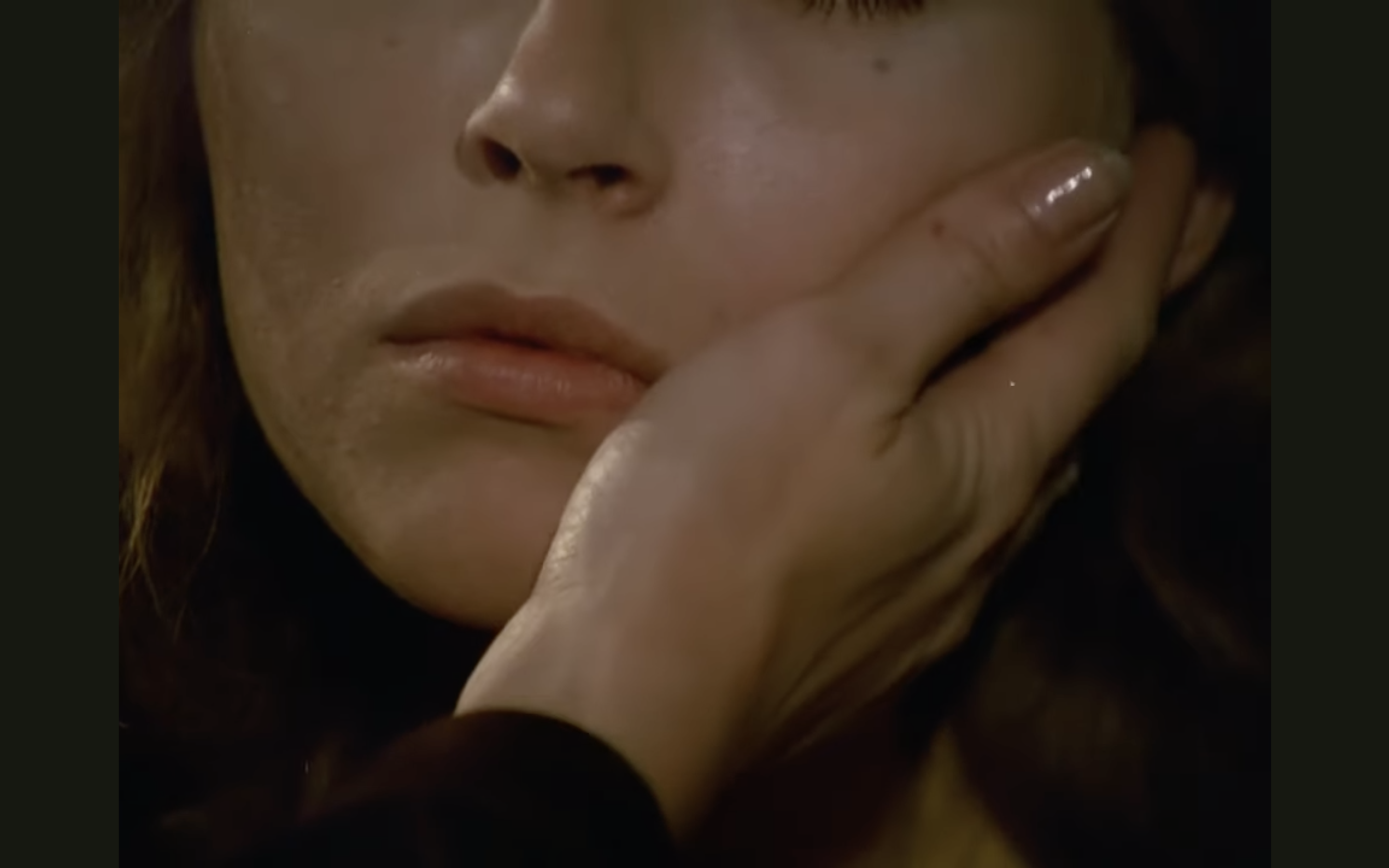
Uma vez que Ângela institui essa divindade, ela ilude a outra, elevando-a, no máximo, a uma ninfa. Nesse sentido, Ângela é a verdadeira deusa, a única que pode desmanchar a deidade dada a Ana; e ela o fará. Adiante, a paciente, não se limitando mais a tocar com os olhos a face e a pele daquela que deveria, se não curar, ao menos remediar-lhe a anima (palavra que aparece talhada na casa de praia em que se encontram), a toca também com as mãos. “Eu sempre fico imaginando como devem ser os ossos de uma pessoa”, diz Ângela, antecipando o corte contundente que transmutará a imagem do visível ao háptico. É em um plano detalhe que a mão de Lilian Lemmertz desliza das bochechas ao queixo de Kate Hansen, recortados pelo quadro. A câmera, no entanto, corrige para sublinhar não mais os olhos fulminantes de outrora, mas aqueles que, intimidados ou hipnotizados, escutam a conclusão em extracampo — “embaixo da carne”.
Se o olho endeusa, a mão reconstitui a matéria. Entre as duas cenas, Ana, tal como Alice, persegue um coelho branco pela floresta. Um plano detalhe (outro) revela algo grudado na face do animal, talvez um carrapicho, talvez um parasita. Pouco importa: fato é que o bicho invade e ganha a tela pela forma grotesca, anunciando o lobo que se embrenha entre as árvores, que levará a curandeira da psique de volta àquela casa magnética, inescapável.
A casa é de Ana, mas são Ângela e o marido Paulo (Mário Benvenutti) quem a ocupam como seres viventes, ainda que catatônicos; toda a linhagem da proprietária jaz em pinturas, esculturas e fotografias, além de objetos com plasticidade antagônica à atmosfera pestilenta das paredes, cuja tinta parece ter sido pigmentada com mofo. A mobília em madeira maciça contrasta com a arquitetura moderna e com o pé direito alto, transformando essa casa-personagem numa espécie de catacumba propositalmente arejada, para que o veneno continue a circular entre os cômodos. O duplo de melindrosas — uma pintada, outra cristalizada no topo de um bolo — e um abajur com “olhos de Medusa” constituem uma síntese decorativa dessa casa de uma cor só. Walter Hugo Khouri filma essa casa esverdeada sem que ela nunca seja verdejante, confabulando sombras que formam um degradê sobre as paredes, articulando bibelôs arrepiantes com o farfalhar agourento das árvores em volta. A textura rançosa antecipa o que Lynch viria fazer, o chiaroscuro lembra Tourneur e Christensen (principalmente nas cenas de sexo); os momentos raros — mas precisos — em que espiona de fora remetem a Naruse, que colocava a câmera num afastamento mínimo para que fosse externa, mas continuasse rente às janelas e parapeitos. É nesse espaço que se fazem e se desfazem As Deusas: o espaço de uma casa possuída. Com a alma envenenada.
The Goddesses
by Álvaro André Zeini Cruz
Ana (Kate Hansen) swims naked in the muddy waters of a stream in the middle of the woods. From a point closer to the bank, Ângela (Lilian Lemmertz), also undressed, watches her — and here it’s worth understanding that the act of watching goes beyond the innate act of seeing. At a certain point in the scene, Ana leans her back against a large rock and looks up, toward the sun that boldly pierces the treetops to splash her face. Her breasts are exposed, underlined by the surface of the water, just like Ângela’s eyes, which spark in the reverse shot. “You look like a goddess,” says the patient Ângela, in an act of shameless scopophilia toward her psychiatrist, who, in turn, answers — not with her voice, but by returning the gaze. Ana descends from the sky in a firm lowering of her face, which settles decisively on Ângela. Ana doesn’t look at her, she takes aim at her, as if, consecrated as a divinity, she could choose to save or strike down the other. A grave mistake.
Once Ângela institutes this divinity, she deludes the other, elevating her, at most, to the status of a nymph. In this sense, Ângela is the true goddess, the only one who can undo the deity bestowed upon Ana — and she will do just that. Later on, the patient, no longer limiting herself to touching with her eyes the face and skin of the woman who should, if not cure, at least remedy her anima (a word carved into the beach house where they meet), touches her with her hands as well. “I always find myself imagining what a person’s bones must look like,” says Ângela, foreshadowing the striking cut that will transmute the image from the visible to the haptic. It’s in a close-up shot that Lilian Lemmertz’s hand slides from the cheeks to the chin of Kate Hansen, both framed within the shot. The camera, however, adjusts to underscore not the once-devastating eyes, but the ones that, intimidated or hypnotized, listen to the conclusion off-screen — “beneath the flesh.”
If the eye deifies, the hand reconstitutes matter. Between the two scenes, Ana, like Alice, chases a white rabbit through the forest. Another close-up reveals something stuck to the animal’s face — maybe a burr, maybe a parasite. It hardly matters: the fact is that the creature invades and takes over the screen through its grotesque form, announcing the wolf that slips through the trees, who will lead the healer of the psyche back to that magnetic, inescapable house.
The house belongs to Ana, but it’s Ângela and her husband Paulo (Mário Benvenutti) who occupy it as living beings, though catatonic ones; the owner’s entire lineage lies in paintings, sculptures, and photographs, along with objects whose visual character clashes with the pestilent atmosphere of the walls, whose paint seems to have been pigmented with mold. The solid wood furniture contrasts with the modern architecture and the high ceilings, turning this house-as-character into a kind of deliberately ventilated catacomb, so that the poison can keep circulating between the rooms. The duo of flapper figures — one painted, the other set atop a cake — and a lamp with “Medusa eyes” form a decorative synthesis of this single-toned house. Walter Hugo Khouri films this greenish house without it ever being verdant, conjuring shadows that form a gradient across the walls, weaving eerie trinkets together with the ominous rustling of the trees outside. The rancid texture anticipates what Lynch would later do; the chiaroscuro recalls Tourneur and Christensen (especially in the sex scenes); the rare — but precise — moments of spying from outside recall Naruse, who placed the camera at a minimal distance so that it remained external, yet still close against windows and windowsills. It’s in this space that The Goddessesare made and unmade: the space of a possessed house. With a poisoned soul.

