
Por Álvaro André Zeini Cruz
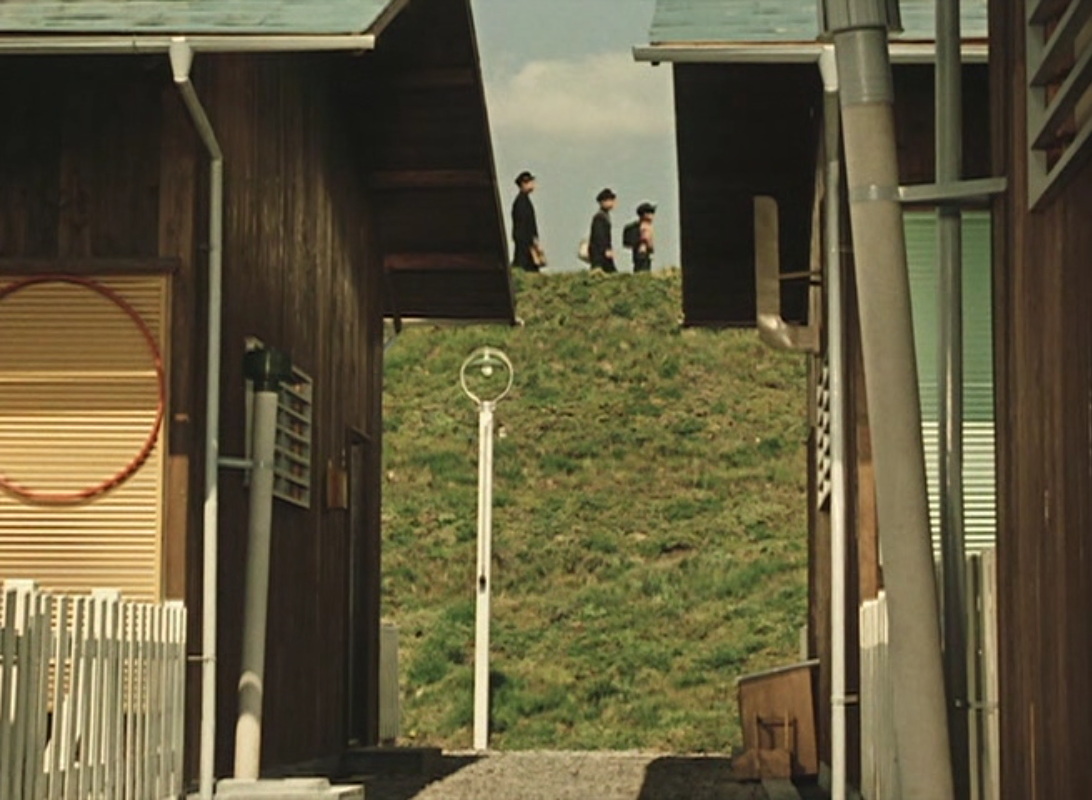
Bom dia (Ohayô, Japão, 1959) e A chegada do outono (Aki Tachino, Japão, 1960) são corpos estranhos nas trajetórias de seus respectivos realizadores – Yasujiro Ozu e Mikio Naruse. E por um mesmo motivo: ambos têm a infância como ponto de vista, sendo que tanto a filmografia de Ozu quanto a de Naruse sempre privilegiariam os conflitos adultos, sobretudo aqueles decorrentes da instituição do casamento.
Não que esses conflitos estejam ausentes. Pelo contrário, o mundo adulto continua sendo gerador de normas e tradições que, em algum momento, serão colocadas em xeque; mas é a infância quem agora dialoga com as regras e engessamentos que esse mundo impõe. É ela quem irá questioná-las.
Em Bom dia, a austeridade dada à educação e à infância é invadida por uma novidade tecnológica: a televisão. Os garotos da vizinhança já não querem mais saber de ficarem em suas casas; sempre que possível, escapolem para a casa do jovem casal de vizinhos que tem um aparelho (casal que é mal visto pelos outros por “passar o dia de pijamas”). Para pressionarem o pai a comprar um aparelho próprio, dois irmãos fazem um voto de silêncio, brincadeira infantil que, no entanto, irá atingir em cheio o mundo adulto. Isso porque o ato de pararem de cumprimentar os demais moradores coincidentemente alinha-se à uma série de fuxicos e picuinhas que tomam a vizinhança. As crianças justificam: acham perda de tempo as conversas adultas vazias – “bom dia”, “boa tarde”, “o tempo está bom”. O professor de inglês justifica tais cumprimentos como lubrificantes do mundo; outra personagem rebate dizendo que os usa o tempo todo para vender carros. O diálogo chega a uma constatação importante: as coisas importantes são difíceis de se dizer; as insignificantes são fáceis.
As crianças detectam essa superficialidade de um mundo restrito, termo aqui não usado à toa: os planos rigorosos de Ozu delimitam o microcosmo lacrado que é aquela vizinhança, de onde se vê muito das outras casas através das janelas, mas que cujo mundo é apenas um vislumbre que se tem através daquele vão que Ozu filma sistematicamente entre as construções. A televisão é o recurso usado pelas crianças para sair dali. Não se desvencilha da superficialidade, mas é outra, externa, não mais a daquela vizinhança.
Em A chegada do outono, a infância ganha o mundo (ou seria ele enfiado goela abaixo?). O garoto Hideo se muda para Tóquio com a mãe, mas é deixado para trás quando esta se apaixona. Sob os cuidados do tio, ele perambula pela metrópole que cresce e se moderniza – e Naruse capta a modernidade do espaço urbano como poucas vezes se viu em sua filmografia. A trama repousa durante boa parte nas peripécias da infância, principalmente a partir do momento em que Hideo faz amizade com Junko, garotinha esperta que, filha bastarda, é ignorada pelos irmãos. Duas almas solitárias que se encontram numa cidade que se reconfigura de forma impiedosa.
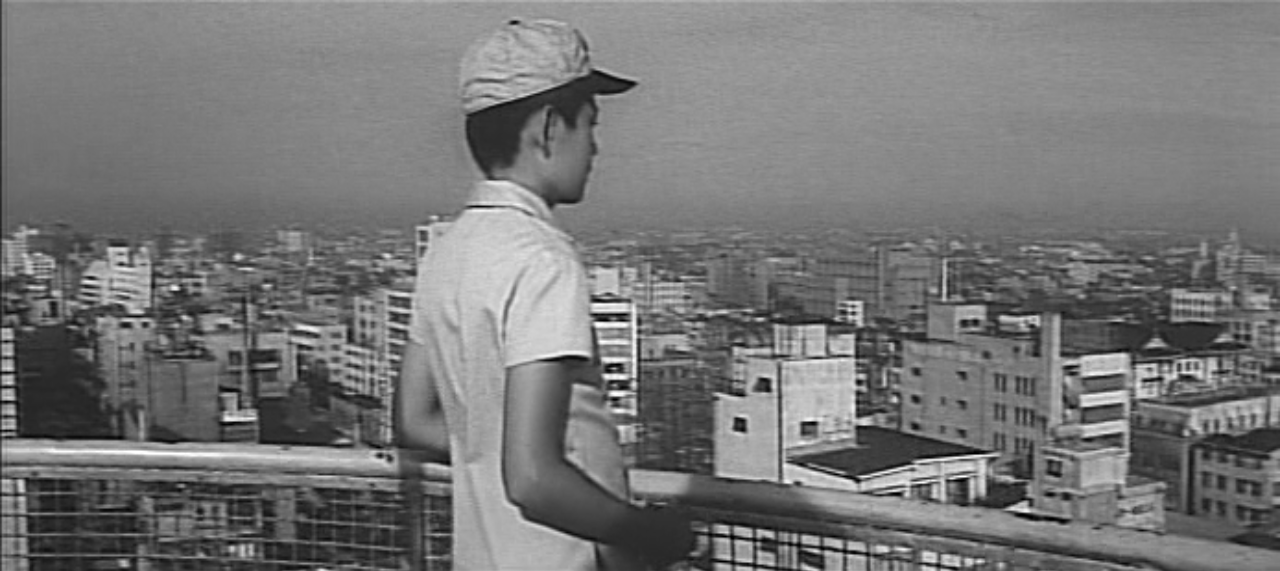
A explosão urbana é visível no contraste entre os cenários: Hideo transita entre o pequeno comércio familiar e as escadas rolantes de um shopping center. É no topo deste último edifício que ele e Junko sobem para encarar a cidade e para verem, para além dela, o oceano, refúgio esse que será responsável por separá-los. Pois a história de Hideo é de abandono: primeiro a mãe, depois o primo mais velho que o troca por uma saída com uma garota, e, por fim, Junko, que é levada após sua ida com Hideo até o mar.
As filmografias de Ozu e Naruse tratam de temáticas semelhantes e se aproximam aqui nesses expoentes sobre a infância. Há, contudo, pequenas marcas capazes de diferenciá-los. A câmera de Ozu é quase sempre frontal, próxima, mas não hiperdramatiza, nem desdramatiza; a imagem é o que é e ponto. Naruse não teme distanciar-se, ainda que jamais saia do melodrama. No fundo, os movimentos são opostos: Ozu pega o cotidiano e o torce, espreme, até que dali tire algum sumo, nem que sejam algumas gotas de otimismo; Naruse pega o dia-a-dia e o estica até que ele se esgarce, e dos intervalos desse esgarçamento brota o pessimismo, a dura realidade dos dias. Ao final de Bom dia, o pai cede, as crianças alegram-se, mas a TV continua encaixotada no meio corredor, mera desculpa para que essas vozes ignoradas se fizessem ouvir. A infância é entendida por Ozu como um enunciador potente, capaz de sublinhar algo até então inaudível e muito mais pertinente do que qualquer enunciado adulto: a consciência de que os tempos e as relações mudaram, e agora, não há mais palavras a perder. A infância de Naruse grita sem ser ouvida. Tal voracidade está no plano final de A chegada do outono: é a imagem de Hideo novamente no topo do prédio a encarar a cidade. Desta vez sem a companhia de Junko, sem a esperança do oceano que se desdobra após os prédios. É ele contra a cidade, o mundo. Sozinho.
Ozu, Naruse, and Japan Through Childhood
By Álvaro André Zeini Cruz
Good Morning (Ohayō, Japan, 1959) and The Approach of Autumn (Aki Tachinu, Japan, 1960) are anomalous bodies in the trajectories of their respective directors – Yasujirō Ozu and Mikio Naruse. And for the same reason: both take childhood as their point of view, whereas both Ozu’s and Naruse’s filmographies would always privilege adult conflicts, especially those arising from the institution of marriage.
Not that these conflicts are absent. On the contrary, the adult world continues to generate norms and traditions that, at some point, will be called into question; but it is childhood that now dialogues with the rules and strictures that this world imposes. It is childhood that will question them.
In Good Morning, the austerity given to education and childhood is invaded by a technological novelty: television. The neighborhood boys no longer want to stay in their own homes; whenever possible, they slip away to the house of the young couple next door who own a set (a couple frowned upon by others for “spending the day in pajamas”). To pressure their father into buying a television of their own, two brothers take a vow of silence, a childish game that, nevertheless, will strike the adult world head-on. This is because their act of stopping greeting the other residents coincidentally aligns with a series of gossips and petty squabbles overtaking the neighborhood. The children justify themselves: they find empty adult conversations – “good morning,” “good afternoon,” “nice weather” – a waste of time. The English teacher justifies such greetings as lubricants of the world; another character retorts that she uses them all the time to sell cars. The dialogue reaches an important realization: important things are hard to say; trivial ones are easy.
The children detect this superficiality of a restricted world, a term not used here by chance: Ozu’s rigorous shots delimit the sealed microcosm that is that neighborhood, from which one sees much of the other houses through the windows, but whose world is merely a glimpse one gets through that gap between buildings that Ozu systematically films. Television is the resource the children use to escape from there. It doesn’t rid them of superficiality, but it’s another kind, external, no longer that of the neighborhood.
In The Approach of Autumn, childhood gains the world (or is it forced down its throat?). The boy Hideo moves to Tokyo with his mother, but is left behind when she falls in love. Under his uncle’s care, he wanders through the metropolis that grows and modernizes – and Naruse captures the modernity of urban space as rarely seen in his filmography. The plot rests for a good part on the adventures of childhood, especially from the moment Hideo befriends Junko, a clever little girl who, as an illegitimate child, is ignored by her siblings. Two lonely souls who meet in a city that reconfigures itself mercilessly.
The urban explosion is visible in the contrast between settings: Hideo moves between the small family shop and the escalators of a shopping center. It’s at the top of this latter building that he and Junko climb to face the city and to see, beyond it, the ocean, a refuge that will be responsible for separating them. For Hideo’s story is one of abandonment: first his mother, then his older cousin who ditches him for a date with a girl, and finally Junko, who is taken away after her outing with Hideo to the sea.
The filmographies of Ozu and Naruse deal with similar themes and come close here in these exemplary works about childhood. There are, however, small marks capable of differentiating them. Ozu’s camera is almost always frontal, close, but neither hyper-dramatizes nor de-dramatizes; the image is what it is, period. Naruse does not fear distancing himself, even though he never leaves melodrama. Ultimately, the movements are opposite: Ozu takes the everyday and twists it, squeezes it, until he extracts some juice from it, even if just a few drops of optimism; Naruse takes day-to-day life and stretches it until it frays, and from the gaps of this fraying sprouts pessimism, the harsh reality of the days. At the end of Good Morning, the father gives in, the children rejoice, but the TV remains boxed up in the middle of the hallway, a mere excuse for those ignored voices to make themselves heard. Childhood is understood by Ozu as a potent enunciator, capable of underlining something previously inaudible and much more pertinent than any adult utterance: the awareness that times and relationships have changed, and now, there are no more words to waste. Naruse’s childhood screams unheard. Such voracity is in the final shot of The Approach of Autumn: the image of Hideo again atop the building, facing the city. This time without Junko’s company, without the hope of the ocean unfolding beyond the buildings. It is him against the city, the world. Alone.
 Pós-créditos