
Por Álvaro André Zeini Cruz
(contém spoilers)
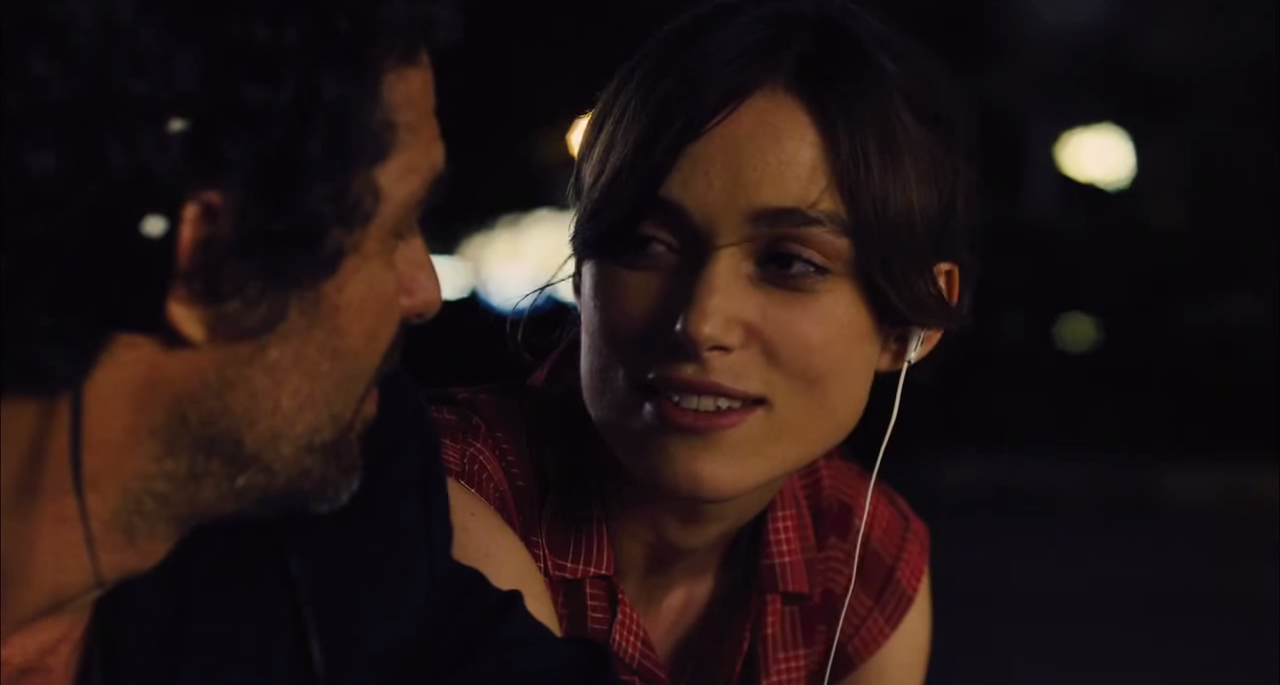
A certo altura de Mesmo se nada der certo (Begin again, EUA, 2013), Dan (Mark Ruffalo) e Gretta (Keira Knightley) andam por Nova Iorque alheios aos sons da metrópole – eles compartilham uma trilha sonora através de um divisor de fones de ouvido ligado ao smartphone de Gretta. Ela então opta por uma música correndo o risco – como ela mesma diz – de ser brega: “As time goes by”, de Dooley Wilson, conhecida canção-tema de “Casablanca”. Ao ouvir a música, Dan olha ao redor e diz que o cinema, quando aliado à música, têm a magia de encher de beleza as coisas mais ordinárias, como os vagantes urbanos que eles encaram pela rua. E como espectadores desta cena aparentemente banal, mas que cujos sentimentos estão ali latentes, somos capazes de compreender a pontuação do personagem.
A fala de Dan é, na verdade, um entendimento vital aos dois longas de John Carney. Em Apenas uma vez (Once, 2006), a música é o entrelaçamento entre duas figuras solitárias; aqui, o enlace entre dois desajustados. Dan surge como a caricatura do beberrão – outrora homem de sucesso – que se deixou abater pelo azar. A princípio, ele é quase que um corpo estranho ao filme, que vai se readequar a partir do encontro com Gretta. Ela, por sua vez, é a outsider recém-chegada, cujo único elo com NY é o namorado que está a poucos passos da fama (e que, quando chega lá, a deixa). A música é quase sempre a catarse que pontua os encontros entre os dois; uma catarse que se potencializa quando instaurada numa história calcada no minimalismo das ações e dos gestos.
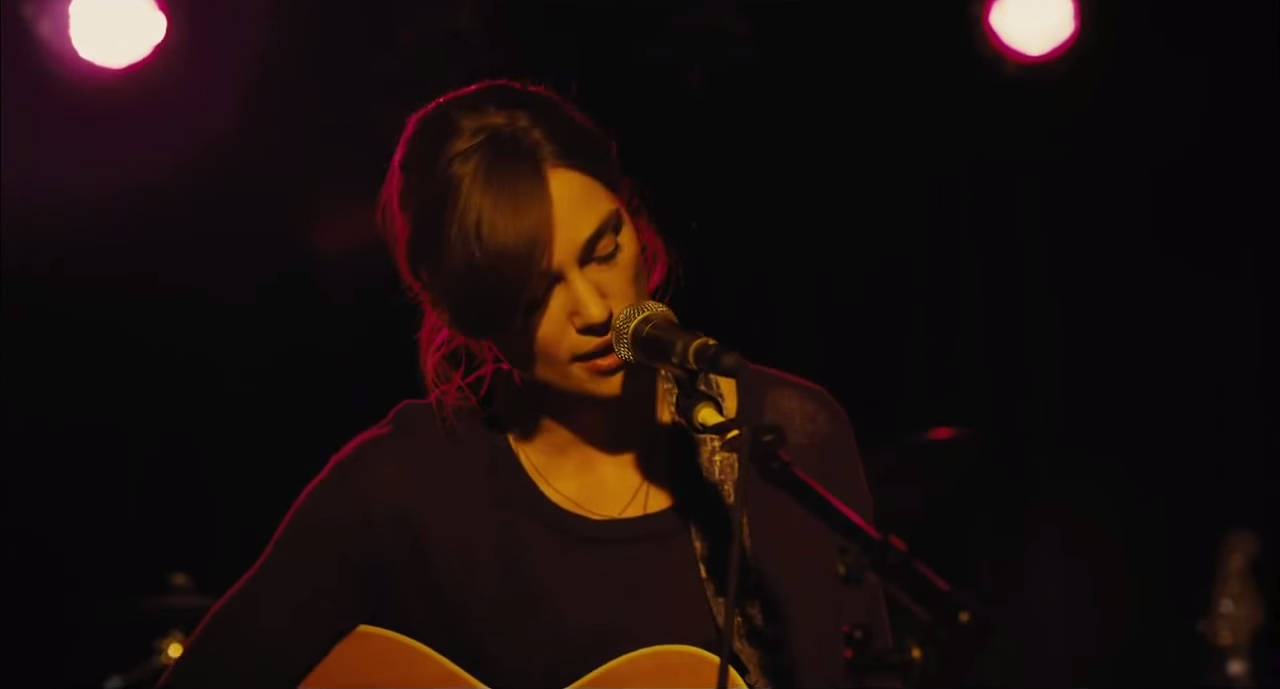
Carney usa da pouco discreta mise-en-scène da câmera na mão (já presente em Apenas uma vez) para criar uma flexibilidade natural, que faz com que o olhar se desvencilhe sem nenhum embaraço de um ponto a outro – dos personagens à cidade ou a um objeto de cena importante, como o divisor de fones pendurado no retrovisor. A mobilidade dessa câmera também corrobora outra característica marcante: a capacidade de encantamento. Um encantamento presente desde o começo do filme, quando Keira Knightley se apresenta num palco; o público na diegése daquele espaço pode até ignorá-la (sintoma de uma certa “cegueira” que acomete nossos tempos), mas ela tem a atenção completa da câmera, que circunda seu corpo na tentativa de registrá-lo na completude de sua graça. É uma abertura forte, onde Knightley se coloca como figura hipnótica a ponto de só permitir que a câmera se desvencilhe quando a música acaba. E quando isso ocorre, lá está o personagem de Ruffalo, estupefato em meio à plateia insensível, partilhando do mesmo encantamento que nós sentimos, graças ao olhar da câmera (e, mais adiante, revemos a cena sob outra perspectiva; desta vez assistindo esse processo de sedução do personagem).
As apresentações musicais são momentos ápices que a câmera de Carney vai registrar, e são propositalmente colocadas em cenários urbanos para tocar algo que concerne ao filme: a arte vive também do caos, do descontrole. No caso de Gretta, ela é o diferencial, o que distancia sua música-arte da música-produto asséptica de seu ex-namorado. Mas esses momentos musicais só existem para que algo menor, mas mais potente ocorra – como o olhar de profundo fascínio de Dan para Gretta no primeiro encontro, o desconcerto diante do belo que brota inesperadamente do cotidiano. Esse interesse pelas trocas de olhares, pelas mínimas oscilações da voz, pelo toque das mãos, algo que poucos cineastas no cinema americano atual se preocupam em registrar com a devida importância (Eastwood e Gray entre eles) é resgatado do filme anterior e aparece neste de forma contundente. Quando o namorado em carreira ascendente mostra sua nova música de trabalho para Gretta, a câmera se ocupa em registrar a mudança daquele olhar. Carney dispensa a dramatização do close; o plano médio é suficiente para mostrar o desapontamento da moça, que compreende que foi trocada.
Keira Knightley surge com uma das mais potentes interpretações deste ano. A dor de sua personagem é comum, cotidiana, mas não por isso menos esmagadora (vide a cena da mensagem de voz). No entanto, é construída com certa leveza, como se ela incorporasse outras tantas mocinhas românticas da história do cinema. Não poderia ser diferente; o filme tem consciência do quão indispensável é Knightley para sua força e sobrevivência, já que traz à tona algo também intrínseco à história do cinema – o fascínio pela beleza feminina, aqui concatenado na atriz. A compreensão que Gretta chega ao final pode ser menos recorrente nas comédias românticas musicais, mas parece cara às histórias de Carney, que pela segunda vez, gira em torno de um personagem “de passagem”, uma dessas figuras que entram nas vidas das outras, passam e vão embora. Em Apenas uma vez isso é quase trágico, já que da transformação, volta-se à solidão. Aqui não: Gretta é elemento restaurador para Dan, ainda que os caminhos deles não estejam para sempre entrecruzados, ainda que seja impossível para ela voltar ao passado. Termina sozinha, mas plena, andando de bicicleta pela cidade. Contudo, não cabe mais um plano médio ou mais aberto (nem a cidade nos interessa mais!). A imagem final não poderia ser outra: sobre as luzes urbanas difusas, o sorriso desconcertante de Keira Knightley se impõe sublinhado pela força do close up e pontua o filme. Com graça e beleza.
Blooming Beauty
By Álvaro André Zeini Cruz
(contains spoilers)
At one point in Begin Again (USA, 2013), Dan (Mark Ruffalo) and Gretta (Keira Knightley) walk through New York, oblivious to the sounds of the city — sharing a soundtrack through a headphone splitter plugged into Gretta’s smartphone. She then picks a song, running the risk — as she herself puts it — of being corny: “As Time Goes By,” by Dooley Wilson, the famous theme song from Casablanca. Hearing the song, Dan looks around and says that cinema, when paired with music, has the magic to fill the most ordinary things with beauty, like the urban wanderers they see on the street. And as viewers of this seemingly mundane scene, one whose feelings are quietly simmering beneath the surface, we’re able to grasp exactly what the character means.
Dan’s line is, in fact, a key to understanding both of John Carney’s feature films. In Once (2006), music is the thread linking two lonely figures; here, it’s the bond between two misfits. Dan shows up as a caricature of the drunk — once a successful man — who let bad luck wear him down. At first, he’s almost a foreign body within the film, one that will find its footing again through his encounter with Gretta. She, in turn, is the newly arrived outsider, whose only tie to New York is a boyfriend on the verge of fame (who, once he gets there, leaves her behind). Music is almost always the catharsis that punctuates their encounters — a catharsis made all the more powerful within a story grounded in minimalist actions and gestures.
Carney uses the none-too-subtle handheld camera mise-en-scène (already present in Once) to create a natural flexibility, letting the gaze drift effortlessly from one point to another — from the characters to the city, or to an important prop, like the headphone splitter hanging from the rearview mirror. This mobile camera also reinforces another defining trait: a capacity for enchantment. That enchantment is present from the very start of the film, when Keira Knightley takes the stage; the audience within that diegetic space may ignore her entirely (a symptom of a certain “blindness” afflicting our times), but she has the camera’s full attention, which circles her body trying to capture her in the full completeness of her grace. It’s a striking opening, with Knightley cast as such a hypnotic figure that the camera only lets go once the song ends. And when it does, there’s Ruffalo’s character, stunned amid an indifferent crowd, sharing in the same enchantment we feel, thanks to the camera’s gaze (and later, we revisit the scene from another angle — this time watching the character’s seduction unfold from within).
The musical performances are the peak moments Carney’s camera captures, and they’re deliberately set in urban environments to touch on something central to the film: art also thrives on chaos, on lack of control. In Gretta’s case, she is the differentiating factor, the thing that sets her music-as-art apart from her ex-boyfriend’s sanitized music-as-product. But these musical moments only exist to make room for something smaller, yet more powerful — like the look of deep fascination Dan gives Gretta at their first meeting, the disarming feeling of beauty unexpectedly blooming out of everyday life. This interest in exchanged glances, in the tiniest shifts of the voice, in the touch of hands — something few filmmakers in American cinema today bother to capture with the attention it deserves (Eastwood and Gray among them) — is carried over from the previous film and shows up here with real force. When the boyfriend, on his way up, plays his new single for Gretta, the camera focuses on capturing the shift in her expression. Carney skips the dramatics of a close-up; a medium shot is enough to show the girl’s disappointment as she realizes she’s been replaced.
Keira Knightley delivers one of the most powerful performances of the year. Her character’s pain is ordinary, everyday, but no less overwhelming for it (see the voicemail scene). And yet it’s built with a certain lightness, as if she were channeling countless other romantic leading ladies from film history. It could hardly be otherwise; the film is well aware of how essential Knightley is to its strength and survival, since it brings to the surface something also intrinsic to the history of cinema — the fascination with feminine beauty, embodied here in the actress. The understanding Gretta arrives at by the end may be less common in musical romantic comedies, but it seems to matter deeply to Carney’s stories, which, for the second time, revolve around a character “just passing through” — one of those figures who enter other people’s lives, stay a while, and move on. In Once, this is almost tragic, since transformation leads right back to solitude. Not here: Gretta becomes a restorative force for Dan, even though their paths won’t stay intertwined forever, even though there’s no going back to the past for her. She ends up alone, but fulfilled, riding her bike through the city. And yet, no medium or wider shot will do anymore (we don’t even care about the city anymore!). The final image couldn’t be anything else: against the hazy city lights, Keira Knightley’s disarming smile asserts itself, underscored by the power of the close-up, punctuating the film. With grace and beauty.

