
Por Álvaro André Zeini Cruz

Já escrevi sobre Além da vida (Hereafter, EUA, 2010) aqui. Mas filmes não se esgotam, ainda mais um de tamanho quilate. Na trama multiplot dirigida por Clint Eastwood, um médium, uma jornalista e um garoto cruzam, cada um a sua maneira, o limiar entre a vida e a morte. A experiência de George (Matt Damon), ocorrida na infância, deu a ele o dom da mediunidade. Marie (Cécile de France), após sobreviver a um tsunami recente, não consegue se reconectar à rotina que levava até então. Marcus (George McLaren), por fim, tenta compreender a perda do irmão gêmeo com quem tinha uma forte ligação, e, para isso, busca respostas em diversas crenças e religiões, mas acaba sempre frustrado.
George considera seu dom uma maldição. Tem motivos para isso, já que quando revelado, esse dom desperta um interesse egoísta por parte daqueles que se aproximam (incluindo seu irmão), que passam a vê-lo como mero instrumento de onde se pode sugar um poder incomum. No entanto, esse fascínio se perde com certa recorrência, como ocorre com Melanie, seu interesse amoroso (Bryce Dallas-Howard, com seu olhar desconcertante pronto a ser captado em closes potentes). A tragédia de George, que ao longo dos anos encontrou no isolamento uma autoproteção (ele, por exemplo, é incapaz de escolher um parceiro no curso de culinária; a parceria tem que lhe ser designada) é contundente na cena em que Melanie descobre seu poder paranormal: ainda que tente se desvencilhar das investidas da moça, acaba se dando por vencido, e ao tocar-lhe as mãos – sua vidência se dá através do toque, – acessa o mais profundo trauma de Melanie, e assim, acaba por perdê-la.
Enquanto isso, Marie é afastada de seu programa de televisão; num meio veloz e globalizado como este, não há tempo para esperar que uma funcionária se cure de um trauma. Ela então dedica seu tempo a escrever um livro que, a priori, seria sobre política. Mas, para Marie, todo assunto se torna mundano após sua experiência de quase morte, e, ainda que a contragosto de seus editores, é sobre a finitude da vida que ela decide escrever. Finitude que nos é diariamente escancarada: tudo finda, do corpo à imagem (os outdoors de Marie que logo são substituídos quando ela é afastada do programa), ainda que evitemos encarar esse fato, nos concentrando nas superfícies do mundo.
São justamente essas superfícies que Eastwood vem criticar: relações, trabalhos, religiões, tudo é institucionalizado, funcionando sob os códigos voláteis da contemporaneidade. George é descartado quando acessa um segredo profundo; Marie, quando deixa de refletir sobre o que é público e urgente (a política e o agora) para pensar a partir de uma experiência privada (e ela pontua que o além da vida também é algo político); Marcus tem seu luto diariamente desrespeitado, seja pelo padre que o dispensa sem sequer confortá-lo, afinal, há outro corpo na “fila” para ser velado e cremado, seja pelos diversos charlatões que cruzam seu caminho e brincam com sua dor.
Poucas cenas atingem o tema tão diretamente quanto aquela em que Marcus está na sala de aula. Como sempre, ele usa o boné-amuleto herdado do irmão, objeto que, ao longo do filme, vemos ter um significado espiritual para o garoto. Próximo a ele, uma menina islâmica veste uma burca que lhe camufla os cabelos. Embora ambos tenham acessórios que lhes cubram a cabeça, a professora, no entanto, só censura Marcos – pede que ele não use o boné em sala de aula. A crítica é certeira: a institucionalização da fé é respeitada; a fé em sua significação mais pura e individual, não. Marcus é obrigado a abrir mão de seu objeto sagrado simplesmente porque este não fora legitimado, porque aparentemente é apenas um objeto ordinário. Não é. É a representação da fé em sua forma mais pessoal, força que emana daquilo que interessa ao filme de Eastwood: a alma.
A estrutura multiplot de Além da vida foi bastante criticada por não necessariamente seguir um crescendo que desemboca no esperado encontro catártico. Não, este não é um filme de Iñárritu. O encontro que acontece é intenso, mas não explosivo, talvez porque ele fosse de qualquer forma inevitável. George, Marie e Marcus se cruzam porque são almas que, ao sofrerem grandes traumas, ficam inviabilizadas de reintegrarem um mundo material, de superfícies, de ocorrências mesquinhas, efêmeras e voláteis. Buscam assim uma conexão entre si, entre aqueles que se compreendem, num mundo em que a compreensão é constantemente trocada pelo armazenamento de informação. O clímax do filme, de fato, não é explosivo, porque Eastwood entende que esse tipo de ligação humana rara, quando acontece, deve ser singela, como é a cena final: George avista Marie e, antes de interpela-la, entrega-se a uma previsão para si – prevê que, finalmente, poderá tocar alguém sem que o toque cause a posterior repulsa (não à toa, a câmera desce dos rostos para as mãos que se tocam). É um encontro único entre duas almas, algo que jamais ocorrerá no completo oposto que é o filme de Spielberg.
Pois a obsessão de AI: Inteligência Artificial (AI: Artificial Intelligence, EUA, 2001) é a mesma – a alma. Mas se no mundo atual de Eastwood ela é um elemento camuflado, latente, mas ainda vivo, no mundo futurista de Spielberg é artigo extinto, já que os afetos são supridos por simulacros. Mecas é como são chamados os robôs cujas imagens são perfeitamente humanas. Há de todos os tipos: o meca-amante (Gigolo Joe, vivido por Jude Law), a meca-babá. E há David (Haley Joel Osment), o meca-menino, programado para amar uma mãe cujo filho está num coma aparentemente irreversível. Mas quando, mesmo contrariando todas as expectativas, o filho verdadeiro acorda, David é rechaçado, não sem antes ouvir da mãe: “me desculpe por não ter te contado sobre o mundo”.
O mundo que Spielberg retrata é o pior desdobramento daquele que Eastwood crê ainda ter salvação – um mundo onde os afetos são comprados e descartados, e onde, ironicamente, a única alma remanescente é um simulacro, David. Pois mais do que a história de um Pinóquio moderno, esta é a história de um Pinóquio às avessas: se no original a curiosidade do boneco de madeira o afastou do amor de Gepeto, aqui o erro de David foi amar demais e verdadeiramente como nenhum outro ser ali fora capaz. Antes de abandoná-lo, a mãe o aconselha: “fique longe das pessoas”. E quando, mais tarde, David evoca a crença nesse amor materno, Joe o alerta: “Ela ama o que você faz por ela, assim como minhas clientes amam o que eu faço por elas”. De fato, as desgraças que se abatem sobre a jornada de David não são provenientes de seus atos ou escolhas, mas das ações de outrem, dos humanos, aqueles a quem ele ama incondicionalmente, ainda que sem reciprocidade.
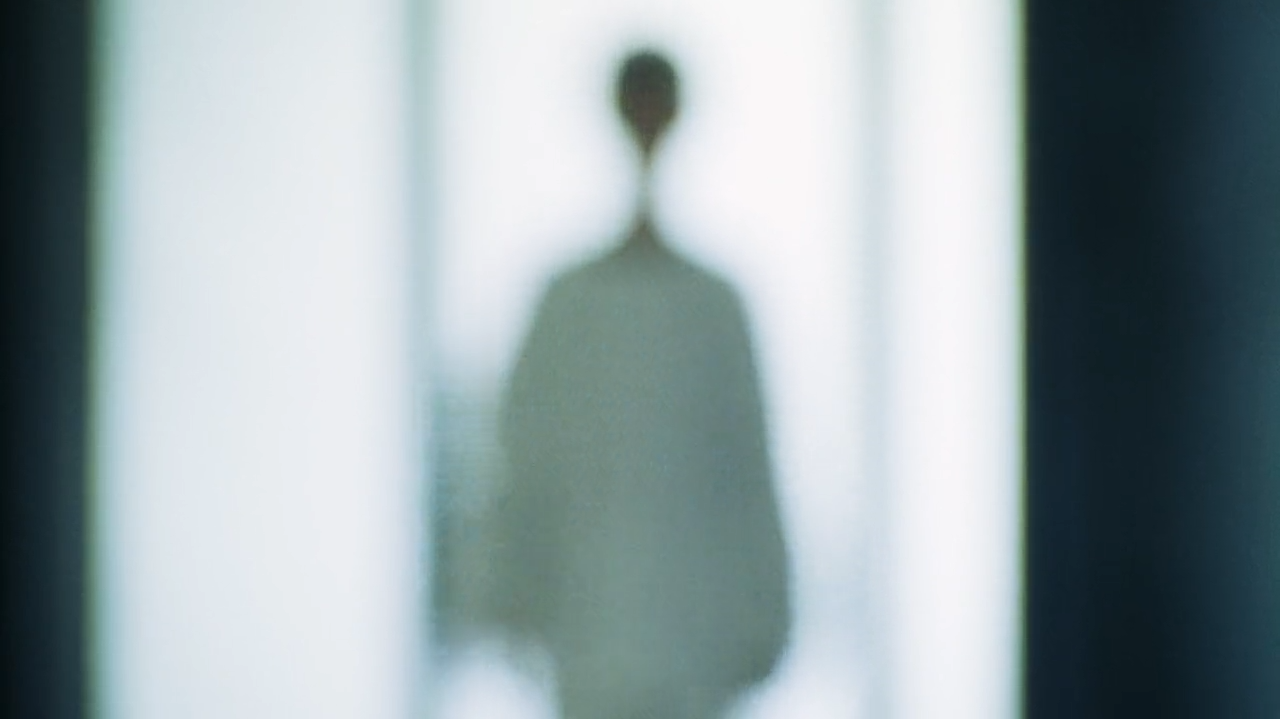
A proteção que David encontra durante a jornada parte sempre de outros mecas, resquícios de uma humanidade agora extinta, e que agora são dizimados por seus criadores, que não toleram a ideia de que suas criaturas possam ser mais longevas do que eles próprios. Nesse sentido, a cena no parque é essencial: assustado ao ver a crueldade com que os mecas são abatidos diante de uma multidão delirante, David agarra a mão de Joe (e o encontro das mãos é tão forte quanto no filme de Eastwood). A multidão, no entanto, parece despertar de um transe ao ver o meca-garoto pronto para ser abatido: o prazer resultante da carnificina promovida até então é interrompido por aquele simulacro da infância, que, ao revelar um sentimento – o medo – gera a desconfiança de que talvez seja real. E é! David persegue o sonho de ser um menino de verdade à toa; seus sentimentos, embora programados, são mais reais do que os dos humanos que o cercam. Quando encontra a tão procurada Fada Azul, ora de forma sobre-humana para que ela atenda seu desejo, faz brotar um resquício de fé naquele mundo desacreditado. Quando acorda de sua hibernação, está transformado: o calor da pele humana faz com que a porcelana fria da Fada Azul se estilhace com o toque. Torna-se também a última memória do que sobrou da humanidade; justo ele, a imagem, o simulacro. Ironicamente, a benevolência não encontrada entre os humanos, ele acha nos seres especiais (seriam alienígenas ou mecas ultraevoluídos? A primeira aparição de David, em desfoque, sugere a segunda hipótese) que atendem seu pedido: um último dia com o ser que David mais amou – a mãe.
Enquanto Eastwood traz certo otimismo num filme em que ligações humanas extraordinárias contrariam um mundo de conexões supérfluas e rasteiras, Spielberg vê no meio de um apocalipse inevitável uma única alma entre tantos e tantos Pinóquios. Uma alma não genuína, um registro, mas que dadas as circunstâncias e cenário, adquire um valor único e inestimável. Eastwood faz um filme sobre almas em extinção; Spielberg, um filme sobre a última alma.
Eastwood, Spielberg and the soul
by Álvaro André Zeini Cruz
I have already written about Hereafter (Hereafter, USA, 2010) here. But films are not exhausted, especially one of such caliber. In the multi-plot story directed by Clint Eastwood, a medium, a journalist, and a boy each cross the threshold between life and death in their own way. George’s (Matt Damon) experience in childhood granted him the gift of mediumship. Marie (Cécile de France), after surviving a recent tsunami, cannot reconnect to the routine she had before. Finally, Marcus (George McLaren) tries to understand the loss of his twin brother with whom he had a strong bond and, to do so, seeks answers in various beliefs and religions, but always ends up frustrated.
George considers his gift a curse. He has reasons for this, as when revealed, this gift sparks a selfish interest from those who approach him (including his brother), who begin to see him as a mere instrument from which to suck an unusual power. However, this fascination is lost with some recurrence, as happens with Melanie, his romantic interest (Bryce Dallas-Howard, with her disconcerting gaze ready to be captured in powerful close-ups). George’s tragedy, who over the years has found self-protection in isolation (he, for instance, is incapable of choosing a partner in his cooking class; the partnership has to be assigned to him), is poignant in the scene where Melanie discovers his paranormal power: though he tries to fend off her advances, he ends up giving in, and upon touching her hands – his clairvoyance occurs through touch – he accesses Melanie’s deepest trauma, and thus, ends up losing her.
Meanwhile, Marie is removed from her television program; in a fast-paced and globalized medium like this, there is no time to wait for an employee to heal from trauma. She then dedicates her time to writing a book that, a priori, would be about politics. But for Marie, every subject becomes mundane after her near-death experience, and, despite her publishers’ reluctance, it is about the finitude of life that she decides to write. A finitude that is daily laid bare for us: everything ends, from the body to the image (Marie’s billboards are soon replaced when she is removed from the program), even if we avoid facing this fact, focusing on the surfaces of the world.
It is precisely these surfaces that Eastwood criticizes: relationships, jobs, religions, everything is institutionalized, functioning under the volatile codes of contemporaneity. George is discarded when he accesses a deep secret; Marie, when she stops reflecting on what is public and urgent (politics and the now) to think from a private experience (and she points out that the hereafter is also something political); Marcus has his grief daily disrespected, whether by the priest who dismisses him without even offering comfort, after all, there is another body in the “queue” to be mourned and cremated, or by the various charlatans who cross his path and toy with his pain.
Few scenes address the theme as directly as the one where Marcus is in the classroom. As always, he wears the cap-amulet inherited from his brother, an object that, throughout the film, we see holds spiritual significance for the boy. Near him, an Islamic girl wears a burqa that camouflages her hair. Although both have accessories covering their heads, the teacher, however, only censors Marcus – she asks him not to wear the cap in class. The critique is precise: the institutionalization of faith is respected; faith in its purest and most individual meaning is not. Marcus is forced to give up his sacred object simply because it has not been legitimized, because apparently it is just an ordinary object. It is not. It is the representation of faith in its most personal form, a force emanating from what interests Eastwood’s film: the soul.
The multi-plot structure of Hereafter was heavily criticized for not necessarily following a crescendo that leads to the expected cathartic meeting. No, this is not an Iñárritu film. The meeting that happens is intense but not explosive, perhaps because it was inevitable anyway. George, Marie, and Marcus cross paths because they are souls who, having suffered great traumas, are rendered unable to reintegrate into a material world of surfaces, of petty, ephemeral, and volatile occurrences. Thus, they seek a connection among themselves, among those who understand each other, in a world where understanding is constantly exchanged for information storage. The film’s climax, indeed, is not explosive, because Eastwood understands that this kind of rare human connection, when it happens, should be simple, as is the final scene: George spots Marie and, before addressing her, gives in to a prediction for himself – he foresees that, finally, he will be able to touch someone without the touch causing subsequent repulsion (it is no coincidence the camera descends from their faces to the touching hands). It is a unique meeting between two souls, something that would never occur in the complete opposite that is Spielberg’s film.
For the obsession of A.I. Artificial Intelligence (A.I. Artificial Intelligence, USA, 2001) is the same – the soul. But if in Eastwood’s contemporary world it is a camouflaged, latent, yet still alive element, in Spielberg’s futuristic world it is an extinct article, since affections are supplied by simulacra. Mechas is what the robots with perfectly human images are called. There are all kinds: the mecha-lover (Gigolo Joe, played by Jude Law), the mecha-nanny. And there is David (Haley Joel Osment), the mecha-boy, programmed to love a mother whose son is in an apparently irreversible coma. But when, against all expectations, the real son awakens, David is rejected, not before hearing from his mother: “I’m sorry I didn’t tell you about the world.”
The world Spielberg portrays is the worst unfolding of the one Eastwood still believes can be saved – a world where affections are bought and discarded, and where, ironically, the only remaining soul is a simulacrum, David. For more than the story of a modern Pinocchio, this is the story of a Pinocchio in reverse: if in the original the wooden puppet’s curiosity distanced him from Geppetto’s love, here David’s mistake was loving too much and truly as no other being there was capable of. Before abandoning him, his mother advises: “Stay away from people.” And when, later, David evokes belief in this maternal love, Joe warns him: “She loves what you do for her, just as my clients love what I do for them.” Indeed, the misfortunes that befall David’s journey do not stem from his acts or choices, but from the actions of others, of humans, those whom he loves unconditionally, though without reciprocity.
The protection David finds during his journey always comes from other mechas, remnants of a now-extinct humanity, who are now being exterminated by their creators, who cannot tolerate the idea that their creations might outlive them. In this sense, the scene at the park is essential: frightened to see the cruelty with which mechas are slaughtered before a delirious crowd, David grabs Joe’s hand (and the meeting of their hands is as powerful as in Eastwood’s film). The crowd, however, seems to snap out of a trance upon seeing the mecha-boy about to be slaughtered: the pleasure derived from the carnage promoted until then is interrupted by that simulacrum of childhood, which, by revealing a feeling – fear – generates the suspicion that perhaps it is real. And it is! David pursues the dream of being a real boy in vain; his feelings, though programmed, are more real than those of the humans surrounding him. When he finds the long-sought Blue Fairy, praying in a superhuman way for her to grant his wish, he sparks a remnant of faith in that disbelieving world. When he awakens from his hibernation, he is transformed: the warmth of human skin causes the cold porcelain of the Blue Fairy to shatter at his touch. He also becomes the last memory of what remained of humanity; he, the image, the simulacrum. Ironically, the benevolence not found among humans, he finds in the special beings (would they be aliens or ultra-evolved mechas? David’s first appearance, out of focus, suggests the latter) who grant his request: one last day with the being David loved most – his mother.
While Eastwood brings a certain optimism in a film where extraordinary human connections defy a world of superficial and shallow connections, Spielberg sees in the midst of an inevitable apocalypse a single soul among so many Pinocchios. A soul not genuine, a record, but which given the circumstances and setting, acquires a unique and priceless value. Eastwood makes a film about souls on the verge of extinction; Spielberg, a film about the last soul.
 Pós-créditos