
por Álvaro André Zeini Cruz
História de Amor Sueca, de Roy Andersson, começa onde termina Meus Pequenos Amores, de Jean Eustache. Para mim, retorna quase 15 anos depois da sessão no cineclube Janela, no auditório da CinetvPr.
Já no prólogo campestre, o decano à mesa diz algo que retumba, constrangendo adultos já arruinados e iniciando a lenta corrosão dos jovens Pär (Rolf Sohlman) e Annika (Ann-Sofie Kylin) — “este mundo não é feito para pessoas sozinhas”. É sobre o peso dessa asserção atravessante, que os dois adolescentes-quase-crianças se veem à distância. Essa troca de olhares se repete entre sustentações e desencontros, em meio aos pequenos bandos festivos que Roy Andersson usa para velar e desvelar essa tentativa contraditória de enxergar, escancarada (na persistência) e inconfessa (no congelamento).
São três festas, que dilatam essa a faísca do desejo no brotar da sexualidade. Os adultos — distantes do nascer e conscientes demais das dores que anunciam a outra ponta —, pouco interferem nesse jogo de erotizações composto, entre cigarros, jaquetas de couro e xerez, por garotos e garotas por volta dos 14 anos. O pai, cuja coleção de armas paira sobre retratos de bebês, a um só tempo, anuncia e aconselha: “No quarto atrás de mim, sua mãe está deitada, abatida. E eu sou um idiota”. Mais tarde, a tia pergunta a idade de Annika e, ponderando ser o bastante, confessa — “Eu estou tão sozinha”.
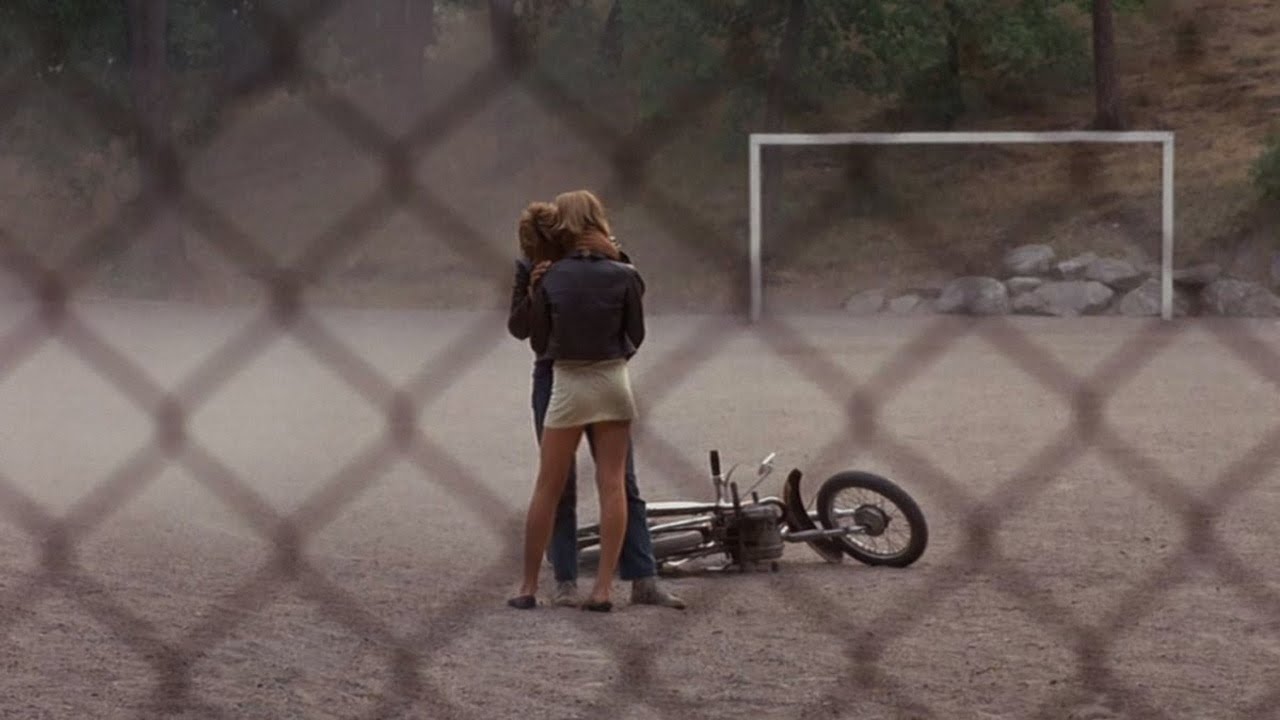
Os olhares — o que Andersson filma melhor — findam quando o choro finalmente escorre diante da moto que parte e volta, na cena que consolida a imagem-imaginário do filme. A partir de então o romance pendula entre o lúdico e o corpóreo, o idílico e o sexual, até que passa a ser suspenso pela intromissão dos adultos, que, ainda que não interfiram diretamente, exalam uma atmosfera empesteada, rançosa, que vai cercando e contaminando esse filme de sol resplandecendo sobre os cabelos, até culminar na névoa, no ato final.
Ali, o filme já é pura alegoria, que apaga Meus Pequenos amores e espreme a história de amor. Talvez por isso, para se salvaguardarem e não adoecerem, Pär e Annika se retiram, deixando os adultos entre seus gritos guturais. Andersson, que começa lembrando Eustache, se aproxima de De Som e de fúria, de Jean-Claude Brisseau, ao injetar, vagarosamente, o veneno de todos os dias nas entranhas desses dias que transitam da infância à adolescência. À parte do grupo de adultos infantilizados em chapéus festivos e babadores, Pär e Annika se abraçam a sós, para nunca mais retornarem à tela. Uma História de Amor (Sueca) que se retira para poder sobreviver.
A Swedish Love Story
by Álvaro André Zeini Cruz
A Swedish Love Story, by Roy Andersson, begins where My Little Loves, by Jean Eustache, ends. For me, it returns almost 15 years after the screening at the Janela film club, in the auditorium of CinetvPr.
Already in the rural prologue, the elder at the table says something that resonates, embarrassing already-ruined adults and initiating the slow corrosion of the young Pär (Rolf Sohlman) and Annika (Ann-Sofie Kylin) — “this world is not made for people who are alone.” It is about the weight of this piercing assertion that the two adolescents-nearly-children see each other from a distance. This exchange of glances is repeated amidst sustained and missed encounters, in the midst of the small festive groups that Roy Andersson uses to veil and unveil this contradictory attempt to see, blatant (in its persistence) and unconfessed (in its frozenness).
There are three parties, which dilate this spark of desire in the budding of sexuality. The adults — distant from the birth and too aware of the pains that announce the other end — interfere little in this game of composed eroticizations, among cigarettes, leather jackets, and sherry, involving boys and girls around 14 years old. The father, whose gun collection looms over baby portraits, both announces and advises: “In the room behind me, your mother is lying, dejected. And I am an idiot.” Later, the aunt asks Annika’s age and, deeming it enough, confesses, “I am so alone.”
The glances — what Andersson films best — end when the tears finally flow in front of the motorcycle that leaves and returns, in the scene that consolidates the film’s image-imaginary. From then on, the romance pendulates between the ludic and the corporeal, the idyllic and the sexual, until it is suspended by the intrusion of adults, who, even if they do not interfere directly, exude a plague-ridden, rancid atmosphere that slowly surrounds and contaminates this film of sunlight shining on hair, culminating in the fog in the final act.
There, the film is pure allegory, which erases My Little Loves and squeezes the love story. Perhaps that is why, to safeguard themselves and not fall ill, Pär and Annika withdraw, leaving the adults amidst their guttural screams. Andersson, who begins by evoking Eustache, approaches Sound and Fury, by Jean-Claude Brisseau, by slowly injecting the everyday poison into the entrails of these days that transit from childhood to adolescence. Apart from the group of infantilized adults in festive hats and bibs, Pär and Annika embrace alone, never to return to the screen. A (Swedish) Love Story that withdraws in order to survive.
 Pós-créditos