
por Álvaro André Zeini Cruz
(english translation below the original text)
Lá se vão quase 10 anos desde aquele Natal (na diegese, já que a série foi lançada em julho) em que Joyce (Wynona Rider) recorreu às luzes pisca-pisca para se comunicar com Will (Noah Schnapp), o filho raptado e mantido por monstros no upside down. Era o início de uma aventura assumidamente inspirada nas histórias de Steven Spielberg e Stephen King, mas que, nesse coming of age, acrescentou traços de Carpenter, Cameron, Craven, Lucas, Scott e outros cineastas com autoria delineada entre a Nova Hollywood e o high concept cinema. Intensificava-se também um período ainda vigente de comercialização da nostalgia, ainda que a série criada pelos irmãos Duffer elabore uma nostalgia pelos anos 1980 a partir de fagocitoses complexas, às vezes mais diretas e referenciais (caso de ET), outras, mais discretas e orgânicas à narrativa (a explicação de Robin [Maya Hawke] comparando personagens a discos da época, no 5º episódio desta última temporada). No diálogo proposto pelo principal título de um streaming — não muito afeito às salas de cinema — e o próprio cinema, uma coisa é certa: Stranger Things ocupa uma lacuna deixada pelo cinema de blockbusters americanos, já que no período em que a série esteve no ar, pode-se contar nos dedos as produções que conseguiram usar a linha da emoção para fazer tal costura entre narrativa e espetáculo.
É em meio a esse cinema de CGI que não sangra — ocupado em criar plasticidade que orne com fantasias de super-heróis —, que Stranger Things recupera uma estética da carne, vista em Carpenter e Craven, mas também em Cronenberg e Verhoeven. Sobre a leva de episódios lançados ontem, em pleno Natal, houve muita reclamação acerca de supostas enrolações, mas o andamento narrativo nunca foi um trunfo da série (e, sim, o universo e os personagens). Em compensação, em apenas três episódios, há cenas com emoções profundas, alicerçadas no vínculo entre personagens (e nós, que os acompanhamos por uma década) proporcionado pela serialidade. Mas, principalmente, são cenas que têm um tempo justo, assumindo que o evento cênico está nesse vomitar e digerir (não necessariamente nessa ordem) vococêntrico, compreendendo que expôr também é agir, e que, muitas vezes, a ação (no senso mais comum) pode esperar. Nesse sentido, o pedido de não casamento de Jonathan a Nancy é derramado como a cera que vai tomando o cômodo, subindo sobre tampo da mesa, numa cena que remonta a controvérsia de Titanic entre as paredes que sangram de Horror em Amityville. A climática cena em que Will assume sua sexualidade, tem a modulação do próprio diálogo entre a rapidez da explanação nervosa e o gran finale engasgado, entrecortado pelas respirações, mas também por todos os contracampos precisos (no sentido de serem necessários e bem-postos) — Joyce, a mãe; Michael, o amigo; Robin, a mentora. Minha preferida é mais breve, mas também esculpe seu tempo (Tarkovski que me perdoe, caso tenha se revirado no túmulo por aplicar seu título-tese a Stranger Things): “You die, I die”, juram-se os amigos Steve (Joe Keery) e Dustin (Gaten Matarazzo), entre closes que respeitam os silêncios dos olhares (o abraço é mera consequência do que está dito nesse não dito), num contraponto (com Jonathan e Nancy) que ressalta que o perigo iminente da morte não precisa, necessariamente, ser encarado pelo amor romântico.
Esse tipo de cena-DR (você vai querer discutir nossa relação agora?, Nancy pergunta a Jonathan, em plena ação no mundo invertido) é a própria carne de Stranger Things. Claro que elenco extenso obriga a série a usar o artifício de compor e recompor grupos de personagens em diferentes situações, não só para haver equilíbrio no desenvolvimento individual, mas para que eles se revelem entre atritos, isto é, a partir de diferentes convivências. Essa dinâmica gera problemas rítmicos num sentido macro narrativo, mas oxigena e dilata as cenas como engrenagens pulsantes, entendendo não só a reconstrução ficcional de um outro tempo histórico (pré-popularização digital), mas também o tempo das histórias desses personagens, que cruzam o “buraco de minhoca” entre a infância e a vida adulta.
É nesse sentido que desvio dos episódios recentes e retorno sentido oposto, mais especificamente ao final da (famigerada) terceira temporada. Pois se, para muitos, a leva de episódios de 2019 pareceu apenas transmutar o monstro da segunda temporada em carne (puro suco de Carpenter) e transportá-lo para dentro de um shopping center, é também ali que está uma das sequências que melhor elaboram o tempo em prol da emoção. A ação é desencadeada por um deadline: Hopper (David Harbour) e Joyce precisam de uma equação (a constante de Planck) para acessar o dispositivo que encerra o portal aberto pelos soviéticos. Do alto de uma colina, Dustin sabe quem pode ajudá-los: Suzie (Gabriella Pizzolo), a namorada nerd que, até então, só havia sido mencionada pelo garoto. Anos antes dos celulares, Dustin contacta Suzie via rádio, mas uma pequena crise conjugal se instala quando ela reclama do sumiço dele (que, ela não sabe, estava ocupado enfrentando demogórgons). Suzie-poo, então, impõe uma prova de amor para que se derrote o horror antes do deadline: Dusty-bun precisa interpretar a canção-título de A História sem fim.
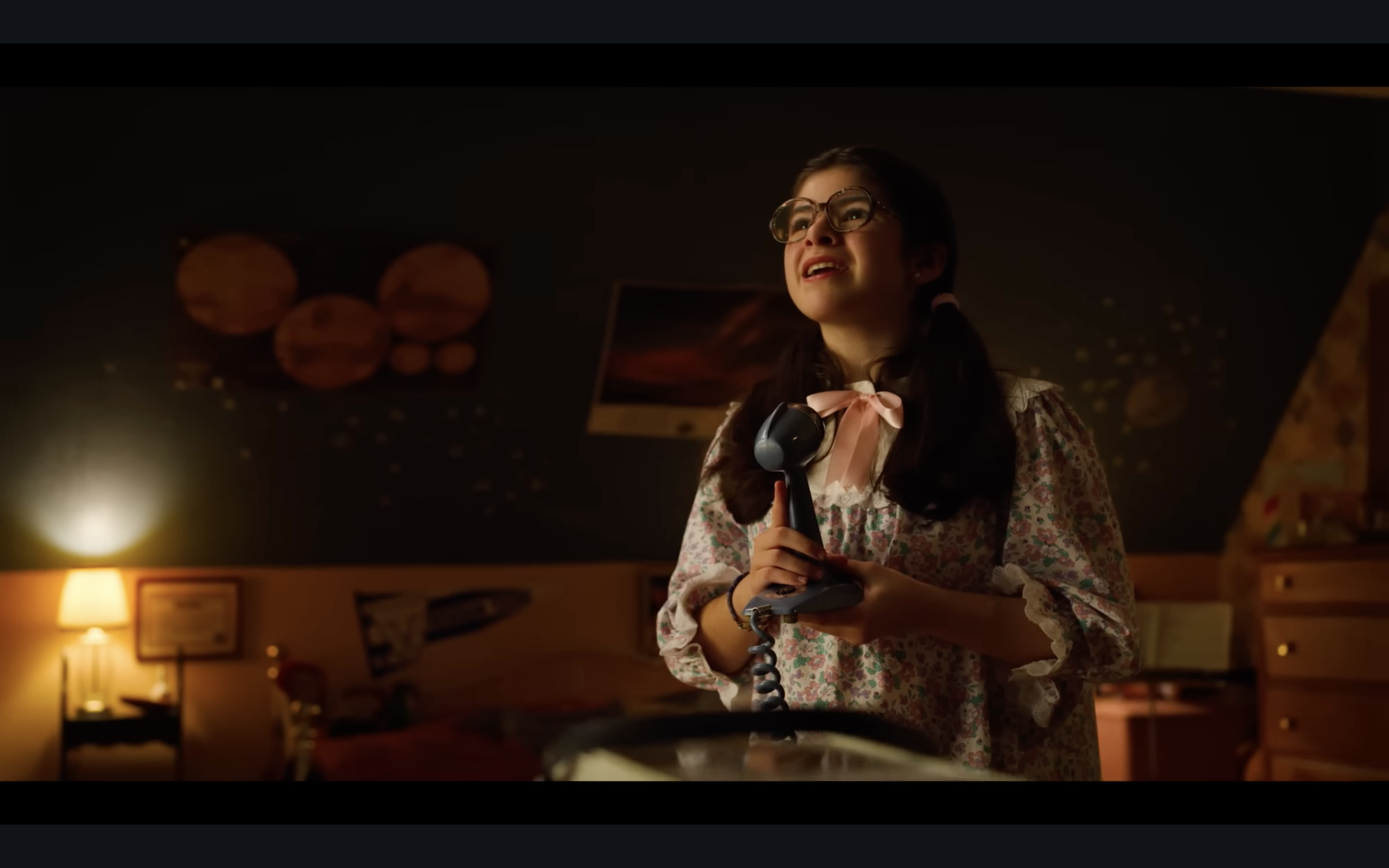
Dustin tenta negociar, mas Suzie é irredutível. Então, sob um céu noturno com nuvens contornadas pelo luar, ao lado de Érica (Priah Ferguson), ele solta um “shit” e inicia a tarefa da guardiã do limiar; com o esganiçado da puberdade, canta: “Turn around. Look at what you see…”. Ao longo dos primeiros versos, à capela, a câmera faz um travelling-in sentido ao rosto de Matarazzo, um dos mais singurales de Stranger Things. O corte inicia a sequência de montagem, que intercala todos os personagens — crianças, adolescentes e adultos — reagindo àquela provação inesperada. O primeiro é, justamente, Steve, o melhor amigo que, a bordo do porta-malas de um carro com Robin, vira o rosto meio incrédulo não mais com o monstro gigante colado ao vidro traseiro, mas com essa aparição da infância em sua forma mais genuína, em meio ao perigo de morte. Ao contrário dele, Robin sorri diante desse inesperado ordinário, contraste bem-vindo ao fantástico recorrente. A música surge definitivamente, com o instrumental encobrindo os demais sons diegéticos, incluindo as pegadas monstruosas. Aos adultos, só resta esperar; na dependência da curiosidade infantil (que faz com que as crianças saibam o que eles não sabem), precisam respeitar esse tempo da infância, que é outro, é skholé. Em determinando momento, a distância geográfica é superada pela tela dividida entre Dustin e Suzie. Ela encarna um paradoxo: olhando levemente para o alto e com uma das mãos estendidas para cima, reproduz uma encenação ufanista em tempo de Guerra Fria; a música, no entanto, canta sobre outra história, outro mundo, em consonância com o background que, preenchido por estrelas e planetas adesivados, compõe um céu artificial. Talvez por isso, quando os versos finais chegam, o olhar alto e esperançoso de Suzie murche em pleno plano. Um desencanto se avizinha nesta última cena de plena infância de Stranger Things.
Na temporada seguinte, lançada três anos depois e com uma pandemia no meio, a infância é apenas um lampejo, e a vida adulta assombra a adolescência da forma mais comum e recorrente: os caminhos se bifurcam e as distâncias parecem incontornáveis. Não serão porque a série está no campo do extraordinário, onde o lugar da infância garante um magnetismo que funciona mais na ficção do que na vida real. Ainda assim, voltam outros, crescidos, com o tempo da infância devidamente embalado, restando, agora, lidar com os traumas e aprendizados. Não à toa, Vecna coopta outras crianças, porque as originais estão, de alguma forma, mortas; criam não mais pela liberdade, mas pela necessidade. Foi ao som de Neverending Story que Stranger Things pôs um ponto final na aventura infantil, essa história que se deseja que não tenha fim, transmutando a série do fantástico ao horror. No não casamento de Nancy e Jonathan e, sobretudo, na promessa entre Dustin e Steve, todos adultos, o mais ordinário dos caminhos desponta: a morte. Stranger Things se encaminha ao desfecho mostrando que extraordinário é poder chegar ao fim ao lado daqueles com quem crescemos. Há muito de King e Spielberg nesses tempos em que “nada acontece”, mas que fazem a carne da série.
Neverending Story é, de longe, a sequência que mais me emociona em Stranger Things.
Stranger Things: The neverending story is not here, it’s near
written by Álvaro André Zeini Cruz
It’s been almost 10 years since that Christmas (in the diegesis, since the series was released in July) when Joyce (Winona Ryder) used Christmas lights to communicate with Will (Noah Schnapp), her kidnapped son held captive by monsters in the Upside Down. It was the beginning of an adventure admittedly inspired by the stories of Steven Spielberg and Stephen King, but which, in this coming-of-age story, added traits of Carpenter, Cameron, Craven, Lucas, Scott, and other filmmakers whose authorship is defined between New Hollywood and high-concept cinema. Furthermore, it also intensified a still-current period of commercializing nostalgia, even though the series created by the Duffer brothers elaborates on a nostalgia for the 1980s through complex, sometimes more direct and referential (as in the case of E.T.),other times more discreet and organic to the narrative (Robin’s [Maya Hawke] explanation comparing characters to records from that era, in the 5th episode of this last season). In the dialogue proposed by the main title of a streaming service—not very fond of movie theaters—and cinema itself, one thing is certain: Stranger Things fills a gap left by American blockbuster cinema, since during the period the series was on the air, one could count on one’s fingers the productions that managed to use the emotional thread to create such a connection between narrative and spectacle.
It is amidst this CGI cinema that doesn’t bleed—busy creating plasticity that adorns superhero fantasies—that Stranger Things recovers an aesthetic of flesh, seen in Carpenter and Craven, but also in Cronenberg and Verhoeven. Regarding the batch of episodes released yesterday, right on Christmas Day, there was much complaint about supposed dragging things out, but the narrative pacing has never been a strength of the series (that’s where the universe and the characters come in). On the other hand, in just three episodes, there are scenes with profound emotions, grounded in the bond between characters (and us, who have followed them for a decade) provided by the seriality. But, mainly, these are scenes that have a just pace, assuming that the scenic event is in this vococentric vomiting and digesting (not necessarily in that order), understanding that exposing is also acting, and that, often, action (in the most common sense) can wait. In this sense, Jonathan’s request to Nancy not to marry is poured out like wax filling the room, rising onto the tabletop, in a scene reminiscent of the Titanic controversy amidst the bleeding walls of The Amityville Horror. The climactic scene in which Will comes to terms with his sexuality is modulated by the dialogue itself, ranging from the rapid, nervous explanation to the choked grand finale, punctuated by breaths, but also by all the precise reverse shots (in the sense of being necessary and well-placed)—Joyce, the mother; Michael, the friend; and Robin, the mentor. My favorite is shorter, but it also carves out its time (Tarkovsky forgive me if he’s turning in his grave for applying his thesis-title to Stranger Things): “You die, I die,” friends Steve (Joe Keery) and Dustin (Gaten Matarazzo) swear to each other, amidst close-ups that respect the silences of their gazes (the hug is merely a consequence of what is said in this unspoken expression), in a counterpoint (with Jonathan and Nancy) that emphasizes that the imminent danger of death does not necessarily need to be faced through romantic love.
This type of relationship-relationship scene (are you going to want to discuss our relationship now?, Nancy asks Jonathan, in the middle of the action in the Upside Down) is the very essence of Stranger Things. Of course, the extensive cast forces the series to use the device of composing and recomposing groups of characters in different situations, not only to balance individual development but also to reveal themselves through friction, that is, from different experiences. This dynamic generates rhythmic problems in a macro-narrative sense, but it oxygenates and expands the scenes like pulsating gears, understanding not only the fictional reconstruction of another historical time (pre-digital popularization) but also the time of these characters’ stories, which cross the “wormhole” between childhood and adulthood.
It is in this sense that I digress from the recent episodes and return in the opposite direction, more specifically to the end of the (infamous) third season. Because if, for many, the batch of episodes in 2019 seemed only to transmute the monster from the second season into flesh (pure Carpenter juice) and transport it inside a shopping mall, it is also there that one of the sequences that best elaborates time in favor of emotion is found. The action is triggered by a deadline: Hopper (David Harbour) and Joyce need an equation (Planck’s constant) to access the device that closes the portal opened by the Soviets. From the top of a hill, Dustin knows who can help them: Suzie (Gabriella Pizzolo), the nerdy girlfriend who, until then, had only been mentioned by the boy. Years before cell phones, Dustin contacts Suzie via radio, but a small dating crisis arises when she complains about his disappearance (which, she doesn’t know, was because he was busy fighting demogorgons). Suzie-poo then imposes a test of love in order to defeat the horror before the deadline: Dusty-bun must perform the title song from The NeverEnding Story.
Dustin tries to negotiate, but Suzie is inflexible. Then, under a night sky with clouds outlined by moonlight, next to Erica (Priah Ferguson), he lets out a “shit” and begins the task of the guardian of the threshold; with the shrill voice of puberty, he sings, “Turn around. Look at what you see…”. Throughout the first verses, a cappella, the camera makes a tracking-in towards Matarazzo’s face, one of the most singular in Stranger Things. The cut begins the montage sequence, which intersperses all the characters—children, teenagers, and adults—reacting to that unexpected ordeal. The first is, precisely, Steve, the best friend who, aboard the trunk of a car with Robin, turns his face away somewhat incredulously, no longer at the giant monster stuck to the rear window, but at this apparition of childhood in its most genuine form, amidst the danger of death. Unlike him, Robin smiles at this unexpected ordinariness, a welcome contrast to the recurring fantastic. The music definitively emerges, with the instrumental music overshadowing the other diegetic sounds, including the sound of the monstrous footprints. Adults can only wait; dependent on childlike curiosity (which allows children to know what they don’t), they must respect this time of childhood, which is different—it’s skholé. At a certain point, the geographical distance is overcome by the split screen between Dustin and Suzie. She embodies a paradox: looking slightly upwards with one hand outstretched, she reproduces a jingoistic staging from the Cold War era; the music, however, sings of another story, another world, in consonance with the background, which, filled with adhesive stars and planets, composes an artificial sky. Perhaps that’s why, when the final verses arrive, Suzie’s high and hopeful gaze withers in full focus. A disenchantment looms in this last scene of pure childhood in Stranger Things.
In the following season, released three years later and with a pandemic in between, childhood is just a fleeting glimpse, and adult life haunts adolescence in the most common and recurring way: paths diverge and distances seem insurmountable. They won’t be, because the series is in the realm of the extraordinary, where the place of childhood guarantees a magnetism that works better in fiction than in real life. Still, others return, grown up, with the time of childhood duly packaged, now left to deal with traumas and lessons learned. It’s no coincidence that Vecna recruits other children, because the originals are, in some way, dead; they create no longer for freedom, but out of necessity. It was to the sound of Neverending Story that Stranger Things put an end to the childhood adventure, that story that one wishes would never end, transmuting the series from fantasy to horror. In the non-marriage of Nancy and Jonathan and, above all, in the promise between Dustin and Steve, all adults, the most ordinary of paths emerges: death. Stranger Things is heading towards its conclusion, showing how extraordinary it is to reach the end alongside those we grew up with. There’s a lot of King and Spielberg in these times when “nothing happens,” which are the heart of the series.
Neverending Story is, by far, the sequence that moves me the most in Stranger Things.
 Pós-créditos