
por Álvaro André Zeini Cruz
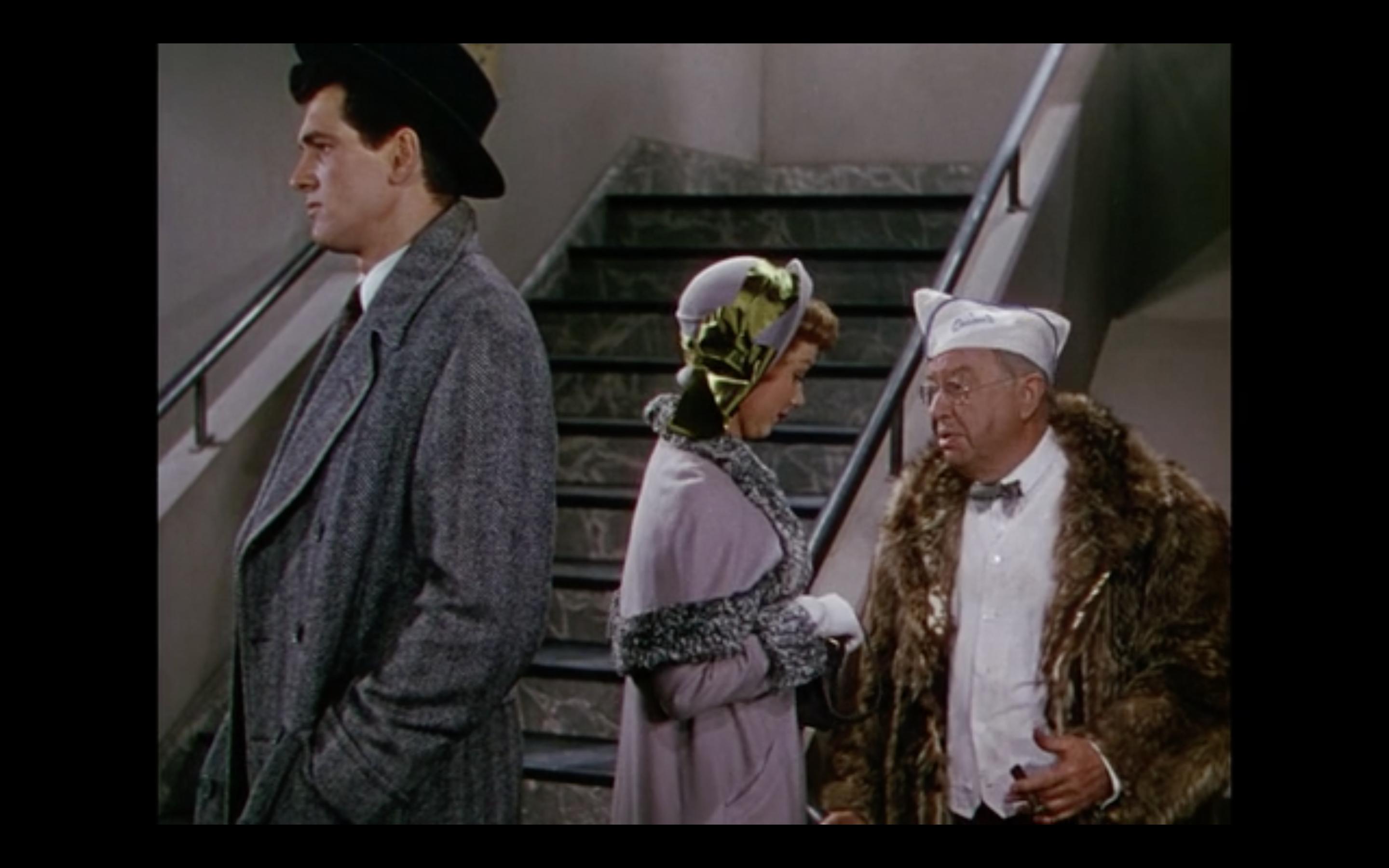
Se Sirk é tido como sinônimo de melodrama, nem só de melodrama vive Sirk. Sinfonia Prateada é a prova de que algumas peças remanescentes do gênero anterior podem ser remontadas pela comédia de costumes. A trama parte de um happy end não consumado: na juventude, Samuel Futton (Charles Coburn) foi a ponta rejeitada de um triângulo amoroso. Agora idoso e sem herdeiros para deixar sua fortuna, ele se infiltra na família da mulher que o rejeitou, adotando-a como se fosse sua e causando altas confusões disfarçado de pensionista pobre.
Primeiro, Sirk apresenta o funcionamento familiar de uma classe média que conta centavos para que o pai se dê ao luxo dos charutos, também contados. De certa forma, é como se recuperasse — transpondo a um outro contexto — a família de Agora Seremos Felizes, centralizando este filme na figura do avô, lateral no de Minnelli. As dinâmicas iniciais são as mesmas: esse avô postiço logo se apega à neta criança (e Roberta lembra muito Tootie), enquanto a neta mais velha vive um romance atravancado pelas circunstâncias. Quando a família recebe o cheque de Futton — sem saber muito bem os motivos que trouxe a eles esse dinheiro —, a vida muda num passe de mágica; as ações, também. Sirk exercita sua veia cômica: a mãe, sempre ressentida com aquela vida de jantares ensopados, desmaia no colo do bom velhinho, que se mantém incógnito como benfeitor. Mal a Sra. Harriet recupera os sentidos e a ordem anterior já começa a se desfazer: o noivado entre a filha Millicent (Piper Laurie) e o trabalhador Dan (Rock Hudson) é descompromissado pela própria mãe em meio à balbúrdia em torno do cheque; a casa será vendida e até o cachorro esfarrapado será trocado por um modelo novo de poodle francês. Do choro emocionado, a mãe passa aos pulinhos excitados, com direito a um “Uipe!” que desconcerta a família, pois sai como ato-falho celebrativo do fim daquele patriarcado pequeno.
Essa é a grande diferença entre os filmes de Sirk e Minelli: naquela casa em St. Louis, em pleno começo do século XX, as mulheres conjugam uma força invisível, que vai se infiltrando entre a mesa e o piano, a janela e o quintal, até comover o pai, dissuadindo-o da mudança de vida autoritária. Em Sinfonia Prateada, o Sr. Charles deixa os dias a postos atrás de um balcão para ser posto, pela esposa, no lugar de rainha da Inglaterra, na mansão que não constitui um lar. Com os pais desaparecidos entre futilidades, os filhos se metem em pequenas confusões ilícitas (insinuando-se um lampejo futuro de Palavras ao Vento), mas são sempre salvos pelo vovô postiço. A estrutura episódica faz com que essas peripécias culminem repetidamente diante de um juiz; a situação, que aparenta ser uma piada aleatória, é crucial para o mal-entendido no clímax.
Disposto, inclusive, às gags — a melhor é aquela em que um beijo é interrompido pela batida na traseira do carro quebrado, que acaba pegando no tranco —, Sirk encontra no ator Charles Coburn a personificação desse Scrooge arrependido antes da visita dos fantasmas. Decidido a não amargar uma velhice solitária, Samuel Futton se desfaz do nome sofisticado para, ao se tornar um comum John Smith, abraçar os frutos da rejeição que o levou a uma vida só. Coburn encarna com energia esse velhinho que, disfarçado sob o uniforme de atendente, veste um pomposo sobretudo de pele e sai de bicicleta para ajudar os seus, que não são exatamente seus. Na cena final, de volta ao lar, a família olha o Sr. Smith se afastar debaixo da neve quando outra confusão se anuncia. Não se resolverá efetivamente nos limites da narrativa, mas simbolicamente, na derradeira frase do protagonista. Quando o repórter pergunta se o Sr. Smith vive ali, o próprio Smith — não reconhecido — responde: “Você vai encontrá-lo lá dentro. Se não em corpo, ao menos em espírito”. Sem os bonecos de neve de Minelli, Sirk encerra insinuando que, mais do que carne e sangue sob um teto, a família é esse conjunto maleável de pessoas que reverberam seus espíritos umas das outras.
Has Anybody Seen My Gal?
by Álvaro André Zeini Cruz
If Sirk is regarded as synonymous with melodrama, Sirk does not live by melodrama alone. Has Anybody Seen My Gal? is proof that certain pieces remaining from the previous genre can be reassembled through comedy of manners. The plot stems from an unconsummated happy ending: in his youth, Samuel Futton (Charles Coburn) was the rejected third point of a love triangle. Now elderly and without heirs to leave his fortune to, he insinuates himself into the family of the woman who rejected him, adopting them as if they were his own and causing major confusion disguised as a poor boarder.
First, Sirk presents the family dynamics of a middle class that counts every penny so that the father can afford the luxury of cigars—also counted. In a way, it’s as if he recovers—transposing to another context—the family from Meet Me in St. Louis, centering this film on the grandfather figure, who was peripheral in Minnelli’s work. The initial dynamics are the same: this adoptive grandfather soon becomes attached to the young granddaughter (and Roberta strongly resembles Tootie), while the older granddaughter experiences a romance hindered by circumstances. When the family receives Futton’s check—without really knowing the reasons behind this money coming to them—life changes in a flash; their actions, too. Sirk exercises his comedic vein: the mother, always resentful of that life of stewed dinners, faints in the arms of the kindly old man, who remains incognito as the benefactor. No sooner does Mrs. Harriet regain consciousness than the previous order begins to unravel: the engagement between daughter Millicent (Piper Laurie) and the working-class Dan (Rock Hudson) is dismissed by the mother herself amidst the commotion over the check; the house will be sold, and even the scruffy dog will be exchanged for a new model of French poodle. From emotional tears, the mother moves to excited little jumps, complete with a “Whoopee!” that disconcerts the family, as it emerges as a celebratory slip-of-the-tongue marking the end of that petty patriarchy.
This is the great difference between Sirk’s and Minnelli’s films: in that St. Louis house, at the very beginning of the 20th century, the women combine an invisible force, gradually infiltrating between the dining table and the piano, the window and the backyard, until they move the father, dissuading him from his authoritarian life change. In Has Anybody Seen My Gal?, Mr. Charles leaves his days behind a counter to be placed, by his wife, in the position of the Queen of England, in the mansion that does not constitute a home. With the parents lost in frivolities, the children get into small illicit troubles (hinting at a future glimmer of Written on the Wind), but are always saved by the adoptive grandpa. The episodic structure makes these escapades repeatedly culminate before a judge; the situation, which seems like a random joke, becomes crucial for the misunderstanding at the climax.
Willing, even, to indulge in gags—the best being one where a kiss is interrupted by the bump on the rear of the broken-down car, which then jump-starts—Sirk finds in actor Charles Coburn the embodiment of this Scrooge reformed before the ghosts’ visit. Determined not to endure a lonely old age, Samuel Futton sheds his sophisticated name to, by becoming a common John Smith, embrace the fruits of the rejection that led him to a solitary life. Coburn energetically embodies this old man who, disguised under an attendant’s uniform, dons a pompous fur overcoat and sets off by bicycle to help his own—who aren’t exactly his own. In the final scene, back at the home, the family watches Mr. Smith walk away in the snow when another confusion is announced. It won’t be effectively resolved within the narrative’s confines, but symbolically, in the protagonist’s final line. When the reporter asks if Mr. Smith lives there, Smith himself—unrecognized—replies: “You’ll find him inside. If not in body, at least in spirit.” Without Minnelli’s snow people, Sirk concludes by suggesting that, more than flesh and blood under one roof, family is that malleable ensemble of people who reverberate each other’s spirits.
 Pós-créditos