
por Álvaro André Zeini Cruz

(Texto originalmente publicado em 2021, em rede social. Contém spoiler).
The Plot against América ficcionaliza a hipótese de que um presidente estadunidense se alinhou a Hitler. Para turvar ainda mais essa adesão, o presidente — um aviador que sustenta a imagem de herói de guerra, másculo e jovem — instrumentaliza um rabino deslumbrado pelo poder para escamotear o projeto eugenista sob um discurso disfarçado de pacifista. A cortina de fumaça que esse rabino lança/é junto à comunidade judaica passa pela lapidação de uma imagem familiar; e da mesma forma como é aliciado (ainda que não perceba), ele coopta Evelyn, personagem de Winona Ryder que não enxerga um palmo à frente. Apesar disso, é ela quem estabelece o trânsito entre a esfera do poder público e o microcosmo íntimo e familiar que apresenta o casal Elizabeth e Herman, protagonistas interpretados por Zoe Kazan e Morgan Spector.
A narrativa se desenrola em banho-maria, com o nazismo cercando a casa e essa vizinhança como uma assombração. Elizabeth o percebe antes, mas Herman subestima os fatos; ele beira o negacionismo, tão inabalável é a crença que tem no american way of life. Quando se dá conta, o que era um fantasma à espreita já é doméstico — adentrou a porta, circulou encanamentos, contaminou cômodos e começa o contágio dos corpos pela “possessão” do primogênito. A concretude do sonho americano se dissipa porque era ilusória; o sonho, justamente pelo material, era volátil. O banho-maria é lento, mas é um processo que também causa evaporação.
Quando um conflito civil explode, Elizabeth tem que acalmar o filho da uma ex-vizinha por telefone. A mãe do menino está desaparecida; ela havia sido transferida para um estado sulista (por uma artimanha de Evelyn), e Elizabeth suspeita que ela foi assassinada pela Klu-Klux-Klan. Está certa; Elizabeth percebera o nazismo se esgueirar entre os canteiros antes de qualquer outro ali.
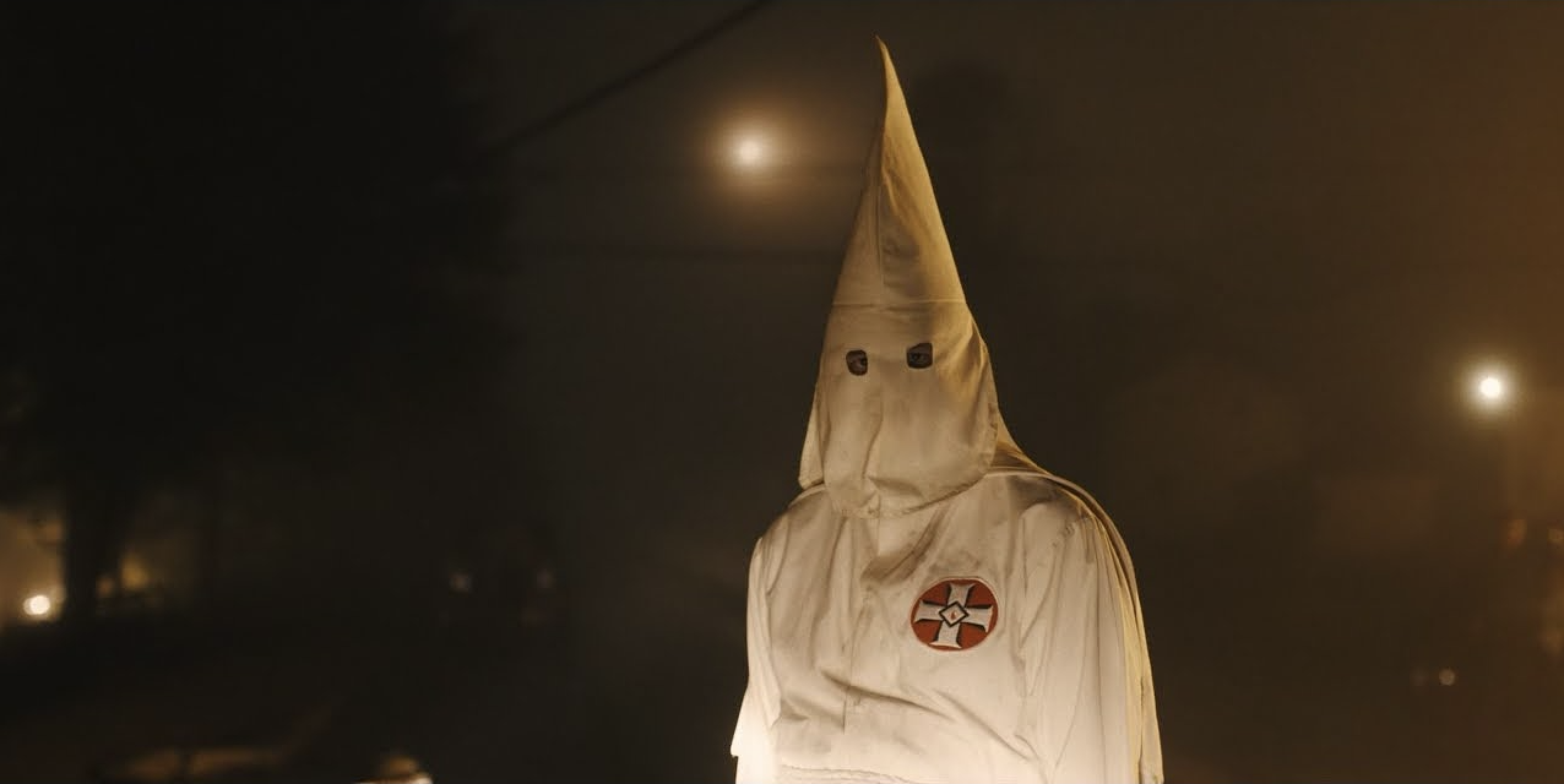
Então, Herman e o caçula cruzam o país para resgatar o garoto; na volta, o drama é interrompido — e soterrado — por outro gênero: o horror. Ao dirigir pela cidade incendiada, Herman cruza um estabelecimento e, pelo vidro do motorista, vê-se um indivíduo da KKK sem o capuz. Os olhares tensos de pai e filho se deixam distrair pelo Mal desmascarado; não vislumbram que outro homem, desta vez em traje completo, se põe diante do carro. A forma como essa presença nos é revelada não poderia ser mais aterradora: num movimento de chicote violento, que estaciona rigorosamente sobre a brancura da indumentária tenebrosa. O fantasma do nazismo — que, a princípio, parecia etéreo e distante do solo da América —, desencadeia e corporifica outro com quem compartilha ideais, e que se posta como um monstro alvejante diante do carro de um pai que se considerava a salvo sob a democracia consumida, mas não consumada. O esfumaçado na imagem é o background desse monstro, porque não é mais insinuação, temor. É rastro de um país de pólvora.
Quando a fumaça se dissipa e Evelyn percebe que ela, judia, se sentara à mesa com nazistas (inclusive literalmente), procura a irmã para protegê-la. Ciente do papel de Evelyn na condução do mal pelas entranhas do país, das casas, das famílias, Elizabeth a abraça, e é nesse abraço que solta — “Tenha certeza que eu sempre a amarei. Mas nunca a perdoarei”. Essas duas frases encerram a catarse e o clímax do Plot: a cisão com quem compactua com o horror é incontornável. A adaptação televisiva de Philip Roth foi feita em momento preciso; é uma ucronia que diz muito sobre a contemporaneidade.
The Plot against America
by Álvaro André Zeini Cruz
The Plot Against America fictionalizes the hypothesis of a U.S. president aligning himself with Hitler. To further obscure this allegiance, the president—an aviator who cultivates the image of a young, masculine war hero—uses a power-hungry rabbi to camouflage the eugenicist project behind a facade of pacifist discourse. The smoke screen this rabbi casts over the Jewish community involves polishing a familiar image; and just as he is co-opted (though he doesn’t realize it), he co-opts Evelyn, Winona Ryder’s character, who can’t see an inch beyond her nose. Despite this, it is she who establishes the connection between the sphere of public power and the intimate, familial microcosm that introduces us to the couple Elizabeth and Herman, the protagonists played by Zoe Kazan and Morgan Spector.
The narrative unfolds at a slow boil, with Nazism surrounding the house and this neighborhood like a haunting. Elizabeth senses it first, but Herman underestimates the facts; he borders on denial, so unshakeable is his belief in the American way of life. By the time he realizes it, what was once a lurking ghost has already become domestic—it has entered through the door, circulated through the pipes, contaminated the rooms, and begins its contagion of bodies through the “possession” of the eldest son. The concreteness of the American dream dissipates because it was illusory; the dream, precisely because it was material, was volatile. The slow boil is gradual, but it is also a process that causes evaporation.
When civil conflict erupts, Elizabeth must calm the son of a former neighbor over the phone. The boy’s mother is missing; she had been transferred to a Southern state (through one of Evelyn’s schemes), and Elizabeth suspects she was murdered by the Ku Klux Klan. She is right; Elizabeth had perceived Nazism creeping among the flowerbeds before anyone else there.
So, Herman and the youngest son cross the country to rescue the boy; on the way back, the drama is interrupted—and buried—by another genre: horror. Driving through the burning city, Herman passes an establishment and, through the driver’s side window, sees a Klan member without his hood. The tense gazes of father and son are distracted by the unmasked Evil; they fail to notice that another man, this time in full regalia, positions himself in front of the car. The way this presence is revealed to us could not be more terrifying: in a violent whip-like movement, coming to an abrupt halt directly upon the whiteness of the sinister garb. The ghost of Nazism—which, at first, seemed ethereal and distant from American soil—unleashes and embodies another with whom it shares ideals, one who stands like a blanched monster before the car of a father who considered himself safe under a democracy that was consumed, but not consummated. The smokiness in the image is the background of this monster, because it is no longer insinuation, no longer fear. It is the trace of a country of gunpowder.
When the smoke clears and Evelyn realizes that she, a Jew, had sat at the table with Nazis (quite literally), she seeks out her sister to protect her. Aware of Evelyn’s role in channeling evil through the guts of the country, the homes, the families, Elizabeth embraces her, and it is in this embrace that she utters—”Be sure that I will always love you. But I will never forgive you.” These two sentences encapsulate the catharsis and the climax of The Plot: the split with those who collude with horror is unavoidable. The television adaptation of Philip Roth was made at a precise moment; it is an uchronia that speaks volumes about the present day.
 Pós-créditos