
por Álvaro André Zeini Cruz
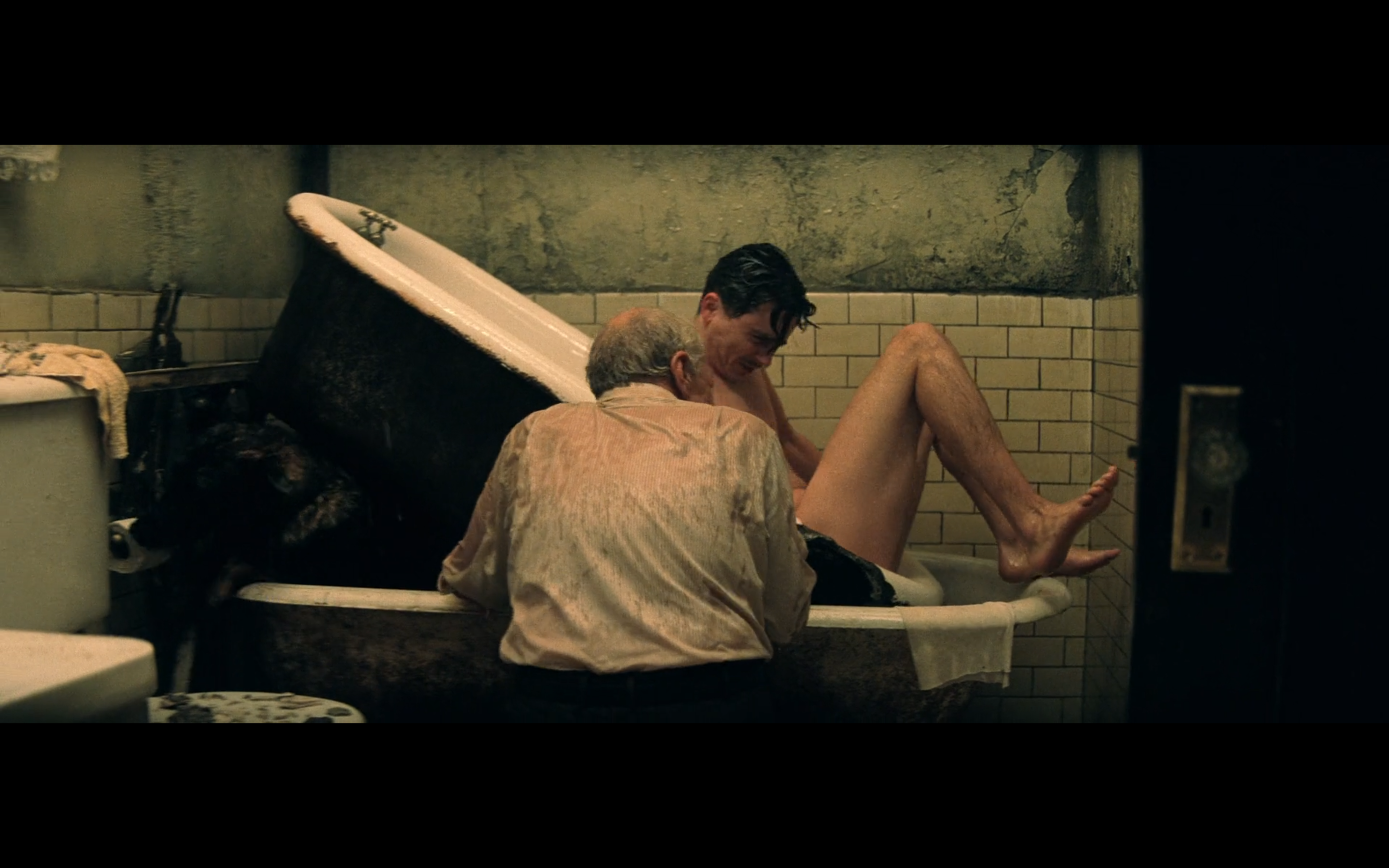
Uma banheira despenca de um andar a outro; um cachorro é ejetado durante uma perseguição entre carros; um colar — quem diria — salva-se ao escoar ralo abaixo, mas, depois, escapa entre os dedos. A gravidade debocha de Marty Reisman (Timothée Chalamet), desviando-lhe essas “oportunidades” feitas em episódios típicos de uma screwball comedy. Nesta, o talento se restringe às mesas; no que resta da vida, os primeiros saques são boas sacadas de um sobrevivente, mas sobreviventes são afoitos, reativos, desajeitados — não conseguem sustentar a impressão de uma vida plena. Logo, a bola quica para fora da linha, e Marty recomeça o trabalho de nos provar que ele próprio é a força para onde gravitam os olhares.
Uma farsa, claro. Marty é mais um dos personagens intricadamente medíocres pelos quais se interessam os irmãos Safdie (aqui só um deles, Josh). O rompimento entre os diretores não desfaz certa fraternidade: Marty Supreme é um filme-irmão de Joias Brutas, sendo que lá, a fé de Howard (Adam Sandler) circundava eventos externos, atrelados a um destino afortunado pressuposto — e, obviamente, ilusório. Neste, a supremacia está em subordinar o próprio destino, ainda que os eventos dramáticos riam dessa crença do protagonista narcisista.
Tudo começa de fato quando Marty usa os tostões que descola de um jeito ou de outro para pagar o jantar alheio e flertar com Gwyneth Paltrow (na verdade, Kay Stone, uma atriz em baixa na carreira). O incidente incitante se completa quando o marido de Kay vem tirar satisfações com o esportista (ah, sim, Marty é jogador de tênis de mesa), e a conversa irônica acaba abrindo os olhos do empresário não para o esporte, mas para um novo mercado. Afinal, no capitalismo, esse é o jogo, não é mesmo?!
A proposta é que Marty embarque para o Japão como um bem remunerado bobo da corte. Mas um homem, além de ter seu orgulho, tem sua crença, e Marty se julga supremo, senhor do próprio destino. Nega a “oportunidade” e passa o resto do filme lidando com as peças que o destino prega a ele — entre elas, a banheira, o cachorro e o colar. Quando o patrocínio volta à mesa, o faz de maneira etimológica, com o pai-patrono dobrando a aposta da humilhação ao reconduzir Marty, o supremo, ao papel de menino levado. A escalação de Chalamet deixa tudo mais interessante ao enfiar esse imenso sedutor num corpo franzino, que tem como desafio sustentar tamanha segurança em meio aos obstáculos da corrida maluca. O efeito é curioso, já que Chalamet consegue a proeza de retroalimentar crença e frustração, de nos levar a autocensura — “não acredito que estou caindo na desse cara de novo”. Caímos, ainda que seja sempre por pouco tempo.
A farsa desse Don Juan risível não se sustenta, a não ser quando o filme encontra, enfim, uma verdade: o duelo final, quando o esporte, essa presença até então lateral, ocupa a tela. Paradoxalmente, outro engodo se desfaz: Marty Supreme se vende como um filme sobre esporte sem nunca o ser, já que, como escrevi no Letterbox, não é um filme sobre um talento em potencial ou sobre o potencial do talento, mas sobre como, apesar dele, pode-se ser potencialmente fodido. Entre os saques certeiros, estão estes últimos e aquele nos créditos iniciais, sob a ironia de “Forever Young”. Entre esses dois pontos, Marty Supreme é um filme sobre saques que iludem no primeiro encaixe no campo oposto, mas que acabam, inevitavelmente, quicando para além da mesa. Entre diegéticas bolas-foras, é uma bola dentro.
Marty Supreme
by Álvaro André Zeini Cruz
A bathtub crashes from one floor to another; a dog is ejected during a car chase; a necklace — who would have thought — is saved by slipping down the drain, only to later escape through someone’s fingers. Gravity mocks Marty Reisman (Timothée Chalamet), snatching away these “opportunities” crafted in episodes typical of a screwball comedy. In this one, talent is confined to the tables; in the rest of his life, the first serves are good moves from a survivor, but survivors are impulsive, reactive, clumsy — they can’t sustain the impression of a full life. Soon, the ball bounces out of bounds, and Marty gets back to the work of proving to us that he himself is the force toward which all eyes gravitate.
A farce, of course. Marty is yet another of the intricately mediocre characters that interest the Safdie brothers (here, just one of them, Josh). The directors’ split doesn’t undo a certain brotherhood: Marty Supreme is a sibling film to Uncut Gems, except there, Howard’s (Adam Sandler) faith revolved around external events, tied to a presumed — and obviously illusory — fortunate destiny. In this one, supremacy lies in subordinating one’s own destiny, even if the dramatic events laugh at this belief held by the narcissistic protagonist.
It all truly begins when Marty uses the spare change he scrapes together one way or another to pay for someone else’s dinner and flirt with Gwyneth Paltrow (actually Kay Stone, an actress whose career is on the decline). The inciting incident is complete when Kay’s husband comes to confront the sportsman (oh yes, Marty is a table tennis player), and the ironic conversation ends up opening the businessman’s eyes — not to the sport, but to a new market. After all, in capitalism, that’s the game, isn’t it?!
The proposal is for Marty to head to Japan as a well-paid court jester. But a man, besides having his pride, has his belief, and Marty considers himself supreme, master of his own destiny. He refuses the “opportunity” and spends the rest of the film dealing with the tricks destiny plays on him — among them, the bathtub, the dog, and the necklace. When the sponsorship returns to the table, it does so etymologically, with the father-patron doubling down on the humiliation by returning Marty, the supreme one, to the role of a naughty boy. Chalamet’s casting makes it all more interesting by placing this immense seducer into a slight frame, whose challenge is to sustain such confidence amidst the obstacles of a madcap race. The effect is curious, as Chalamet achieves the feat of feeding back belief and frustration, leading us to self-censorship — “I can’t believe I’m falling for this guy’s act again.” We fall for it, even if it’s always for a short time.
The farce of this laughable Don Juan doesn’t hold up, except when the film finally finds a truth: the final duel, when the sport, that hitherto lateral presence, takes over the screen. Paradoxically, another deception falls apart: Marty Supreme sells itself as a film about sports without ever being one, since, as I wrote on Letterboxd, it’s not a film about potential talent or the potential of talent, but about how, despite it, one can be potentially screwed. Among the precise serves, there are these final ones and the one in the opening credits, under the irony of “Forever Young.” Between these two points, Marty Supreme is a film about serves that deceive on the first bounce in the opponent’s court, but inevitably end up bouncing off the table. Between diegetic faults, it’s a point scored.
 Pós-créditos