
por Álvaro André Zeini Cruz
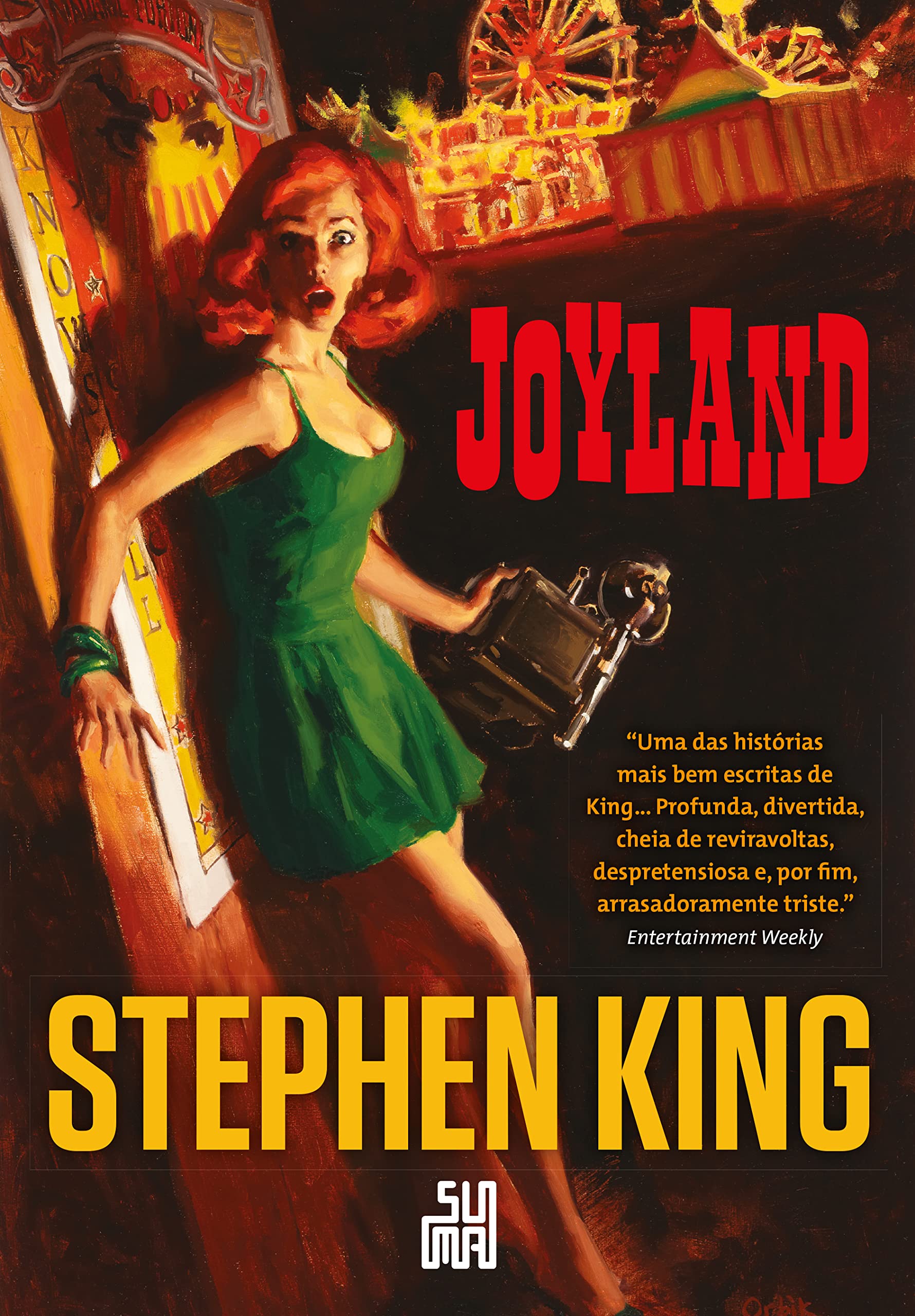
“— Meu Deus — disse ela —, olhe o cabelo dele! Como fica esvoaçando”.
A imagem dos cabelos esvoaçantes de Mike no carrossel voador — observados pela mãe Annie — surge na parte final de Joyland para embasbacar-nos de dentro para fora: da voz encantada desta mãe, que assiste as últimas alegrias do filho, aos olhos externos, leitores, meus (no caso), trepidantes a bordo da escuridão de um Expresso de Prata. Não, o ônibus não passara por nenhum desnível na estrada; era eu que havia me deparado inesperadamente com a imagem-tema desta roda-gigante de Stephen King.
“Os jovens crescem, mas os velhos só ficam mais velhos e mais seguros de que estão certos”.
Joyland traz as memórias de Devin, um narrador-personagem que conta o longínquo verão de 1973. Aos 21, e com o coração partido, Devin aproveita as férias universitárias e parte para um trabalho temporário no parque que intitula o romance. Lá, vive encontros (e os desdobramentos naturais destes — os desencontros), como com o casal Tom e Erin, que se conhecem ali para acompanharem-se até que a morte de um deles os separe. Mas Devin, o amigo, separa-se antes, ao menos fisicamente; quando o verão acaba, ele decide continuar trabalhando no parque, moribundo até a próxima estação (ou até a Disney levá-lo à falência). Devin, que tem a “alma de parque”, permanece como um sopro de vida nesta Terra da Alegria quase inoperante, ocupada pelos poucos funcionários fixos e pelo fantasma que habita uma das atrações.
Sim, há um fantasma no trem fantasma de Stephen King, que, entretanto, faz deste a única atração de horror do parque. Vista por Tom — o mais cético do trio de amigos —, a assombração da moça assassinada nos trilhos é um horror conhecido, praticamente concretizado na arquitetura confinada do brinquedo. Contudo, há outros horrores em Joyland, menos palpáveis. Porque, como no mundo, o horror se dissimula e, por vezes, demora a se desvendar.
“Tentei muito acreditar quando eu era criança, mas não consegui. Deus e o céu duraram uns quatro anos mais do que a fada do dente, mas, no final, não consegui. Acho que só tem escuridão. […] Esquecimento”.
Nesse sentido, há uma reciprocidade entre o parque e o mundo: entre dispositivos dispostos a ocasionar o riso, a adrenalina ou o deslumbramento, há uma ponta inevitável — e inexplicável — do horror, palavra cuja etimologia remonta a externalização corpórea de algo que borbulha por dentro — o medo. Para que esse parque-microcosmo seja posto em operação, é preciso alma, seja a de Devin ou de Howie, o cão feliz, ambos salvadores de meninas engasgadas, velhos infartados ou de um Mike excessivamente consciente da própria (e próxima) finitude. Em uma Terra em a existência é atrelada ao desaparecimento, à morte, não é possível uma Terra da Alegria sem que haja buscas, encontros e suor.
“— Agora sei como minha pipa se sente”.
Mas esse livro de parque de diversões é principalmente sobre a compreensão de que entre movimentos, tudo é relativo e passageiro. Em Joyland, aquilo que é do mundo que não nos habita é rarefeito e volátil. A partir desse entendimento, Stephen King escreve sobre os encontros não como proximidades táteis ou permanências físicas, mas como colisões imateriais e com tempo indefinido, capazes de criar cicatrizes na memória. Apesar de impalpável e limitada, para King a memória sim é matéria, se não concreta, real, composta em placas tectônicas movediças, com fendas prontas a jorrarem sons e imagens das atrações (e dos Bobs, como são chamados os visitantes de Joyland) do mundo, só que impregnadas do eu — “quando se trata de passado, todo mundo escreve ficção”.
Se o clímax chega sob os ventos de uma tempestade tropical — e “no topo, onde o ar é pouco e a vista é coisa de louco” — para pontuar a investigação (postergada e quase lateral) do assassinato assombrado, é simbólico que os mistérios de Joyland rondem os movimentos aéreos, a começar pela ventilação da alegria — a inspiração e expiração aumentadas do riso, a lembrança da voz arejada pelos cabelos ao vento. Neste Stephen King, Jesus é a pipa de um menino com pulmões enfermos, mas ansioso pelos últimos risos antes da certeza absoluta: a de que os corpos, sem exceção, voltarão às cinzas, ao pó que desaparecerá sob a força invisível do vento. Pois neste King, o grande mistério não é a fantasmagoria, mas essa substância que nos cerca enquanto caminhamos ou vagamos, aquilo que nos preenche, nos envolve ou nos atravessa com mais ou menos fôlego, até o derradeiro mistério, o único que também é certo.
“Mas, cedo ou tarde, o último momento feliz chegaria. Chega para todo mundo”.
Joyland by Stephen King
by Álvaro André Zeini Cruz
“My God,” she said, “look at his hair! The way it flies out.”
The image of Mike’s hair flying out on the flying carousel — observed by his mother Annie — appears near the end of Joyland to astonish us from the inside out: from the enchanted voice of this mother, watching her son’s last joys, to the external eyes, the readers, mine (in this case), trembling aboard the darkness of a Silver Streak. No, the bus hadn’t hit any bump in the road; it was me who had unexpectedly come face to face with the theme-image of this Stephen King ferris wheel.
“The young grow up, but the old just get older and more certain they’re right.”
Joyland brings the memories of Devin, a narrator-character recounting the distant summer of 1973. At 21, with a broken heart, Devin uses his college break to take a seasonal job at the park that titles the novel. There, he has encounters (and their natural fallout — the missed connections), such as with the couple Tom and Erin, who meet there to stay together until death do them part. But Devin, the friend, separates first, at least physically; when summer ends, he decides to keep working at the park, moribund until the next season (or until Disney drives it out of business). Devin, who has “park soul,” remains as a breath of life in this nearly inoperative Joyland, occupied by the few permanent employees and the ghost that haunts one of the rides.
Yes, there’s a ghost in Stephen King’s ghost train, which, however, he makes the park’s only horror attraction. Seen by Tom — the most skeptical of the trio of friends — the haunting of the girl murdered on the tracks is a known horror, practically materialized in the ride’s confined architecture. Yet, there are other horrors in Joyland, less tangible. Because, as in the world, horror disguises itself and, at times, is slow to reveal itself.
“I tried really hard to believe when I was a kid, but I couldn’t. God and heaven lasted about four years longer than the tooth fairy, but in the end, I couldn’t. I guess there’s just darkness. […] Oblivion.”
In this sense, there’s a reciprocity between the park and the world: among devices designed to elicit laughter, adrenaline, or wonder, there’s an inevitable — and inexplicable — edge of horror, a word whose etymology harks back to the corporeal externalization of something bubbling up from within — fear. For this microcosm-park to operate, it takes soul, be it Devin’s or that of Howie the Happy Hound, both saviors of choking girls, heart-attacked old men, or a Mike overly aware of his own (and impending) finitude. In a world where existence is tied to disappearance, to death, a Joyland is not possible without searches, encounters, and sweat.
“Now I know how my kite feels.”
But this amusement park book is mainly about understanding that between movements, everything is relative and transient. In Joyland, what belongs to the world that does not inhabit us is rarefied and volatile. From this understanding, Stephen King writes about encounters not as tactile proximities or physical permanences, but as immaterial collisions with indefinite duration, capable of creating scars on memory. Though intangible and limited, for King memory is matter, if not concrete, then real, composed of shifting tectonic plates, with fissures ready to spew forth sounds and images from the world’s attractions (and the “Bobs,” as Joyland visitors are called), yet impregnated with the self — “when it comes to the past, everyone writes fiction.”
If the climax arrives under the winds of a tropical storm — and “at the top, where the air is thin and the view is crazy” — to punctuate the investigation (delayed and almost peripheral) of the haunted murder, it’s symbolic that Joyland’s mysteries revolve around aerial movements, starting with the ventilation of joy — the heightened inspiration and expiration of laughter, the memory of the voice aired by wind-tossed hair. In this Stephen King, Jesus is the kite of a boy with sick lungs, but eager for the last laughs before the absolute certainty: that bodies, without exception, will return to ashes, to dust that will disappear under the invisible force of the wind. For in this King, the great mystery is not the phantasmagoria, but that substance that surrounds us as we walk or wander, that which fills us, envelops us, or passes through us with more or less breath, until the ultimate mystery, the only one that is also certain.
“But sooner or later, the last happy moment would come. It comes for everyone.”
 Pós-créditos