
por Álvaro André Zeini Cruz
ET, telefone, minha casa. Esse é o ápice do domínio linguístico ao qual chega o alienígena criado por Steven Spielberg no clássico ET – O Extraterrestre. Não significa que ET não se comunique com o outro “extraterrestre” que habita o filme — o garoto Elliott Taylor, cuja solidão encontra paralelo na circunstância da criatura deixada para trás. Pelo contrário, se o filme existe e emociona, é porque os dois Ets desenvolvem, para além da língua, uma linguagem própria entre tantas possíveis. A síntese dessa comunicação — da etimologia “tornar comum” — se dá pela luz, matéria-prima que fascina Spielberg desde a infância (como vimos em Os Fabelmans) e que brota do indicador longilíneo de ET antes de encontrar o dedo de Elliott. A mágica luminosa representa uma linguagem extraordinária e singular aos dois, clandestinos no closet, enquanto, ao lado, a mãe reparte com uma pequena Drew Barrymore o mais banal dos encantos: narra Peter Pan, passando os olhos sobre as letras de um livro.
Se Roland Barthes diz que a língua é fascista em seus códigos fechados, que conotam a detenção de um poder, defende também que há uma forma de trapaceá-la, num “logro magnífico que permite ouvir a língua fora do poder, no esplendor de uma revolução permanente da linguagem”, que Barthes chama de “literatura”. Ela aparece espelhada na cena de ET: vivida pela menininha, que ilusiona dentro de si a Terra do Nunca, e pelo irmão, que, abençoado pela infância (o dom que perdemos e passamos a vida toda tentando recuperar), presencia o fantástico diante de si. No clímax, para ajudar ET a deixar esse planeta daninho, Elliott e os amigos voam em suas bicicletas, mas apenas para se desvencilharem da ganância dos homens e pegarem um atalho até a espaçonave. No filme de que falo a partir de agora, a ganância dos homens é incontornável e apaga, de uma só vez, a matéria-prima da vida e desse simulacro chamado cinema. Em Devoradores de Estrelas, Elliott Taylor continua solitário, mas cresceu. E, diante da falência das conexões terrenas, só resta a ele ir ao espaço.
Aqui, Elliott é Grace (Ryan Gosling), a graça da qual depende a humanidade num filme cujo título original, Project Hail Mary, significa “Projeto Ave Maria”. Obviamente, não é o personagem de Spielberg, mas é como se fosse, já que segue com dificuldades comunicacionais a não ser quando conectado à infância, aos alunos com quem convive na rotina como professor. É na sala de aula que ele sustenta o teatro da crença na humanidade, tentando iludir as crianças com uma luz no fim do túnel. É ali que ele é cooptado por Eva Stratt (Sandra Hüller), justamente porque, no passado, fez aquilo que se espera dos cientistas — contestou a ciência para que ela não se torne uma verdade estanque e evolua não linearmente, mas aos solavancos. Em Devoradores de Estrelas, um micro-organismo apaga a luz do sol e de outros astros. A humanidade, portanto, precisa de um solavanco para sobreviver, e ninguém melhor do que esse sujeito, que atua com quem está em plena construção do conhecimento (as crianças) e contesta aqueles que acham que o detêm (os adultos). Quando, na sala de aula, a Dra. Stratt apanha um pequeno globo terrestre de brinquedo, Grace alerta — “cuidado, é lava” —, ao que ela responde pragmaticamente: “não, não é”. Estabelece-se o buraco negro entre os que creem na língua, a codificação dura, e os que preferem a linguagem, essa trapaça criativa capaz de ser reinventada apenas na alteridade.
A questão é que o povo da língua é traiçoeiro e, para sobreviver, enfia o pobre professor numa enrascada: Grace é promovido a astronauta sem querer, e, quando o filme começa, desperta numa solidão que passa do figurado ao literal. E ainda que a trama ponha abaixo sua hipótese de que a vida independe da água, sustenta, por outro lado, a premissa ainda mais basilar de que a vida existe fora da Terra. É essa crença sobre-humana que o conduz ao contato — antes físico (através de um túnel) do que simbólico — com uma espaçonave feita de riscos que parecem materializar a velocidade da luz vista nos filmes de Star Wars. É do trânsito entre a ficção científica e o fantástico que surge Rockie, criatura que aparenta anteceder o ET de Spielberg, cujo corpo tinha contornos orgânicos e preenchimento terroso. Ainda mais primitivo, Rockie é um amontoado de pedras brutas, não lapidadas. Mas Grace descobre que aqueles que têm a dádiva do sonho podem se comunicar com quem quiser, até mesmo com um monte de pedras que emitem longos guinchos.
Abre-se uma subtrama que faz parecer ainda mais pretensiosa A Chegada, de Villeneuve; o que lá era um filme inteiro, aqui se torna uma sequência em que a tradução é mero dispositivo auxiliar ao contar (as línguas relacionadas por intermédio dos referentes), que se estabelece sobretudo por outras vias, acima de tudo por uma verdade tornada em comum: a escuridão condena à morte terrestres e extraterrestres. A vida passa a ser, portanto, uma utopia em comum a esses dois representantes de diferentes espécies, que guardam o sono um do outro, como se voltassem às cavernas (e não voltaram?!). As peripécias, a partir daí, são clássicos voos entre suspensões e deadlines, com a diferença de que, embora mastigue filmes como 2001 e Alien, o interesse aqui é devorar o filme de aventura como gênero primordial, posto no espaço numa contemporaneidade em que, simbolicamente, a lava cede em sua luminância e em que a Terra passa a ser um corpo opaco, sem superfícies refletoras. Stratt tinha razão: não é lava, é um planeta feito de brinquedo, na amplitude dessa ideia.
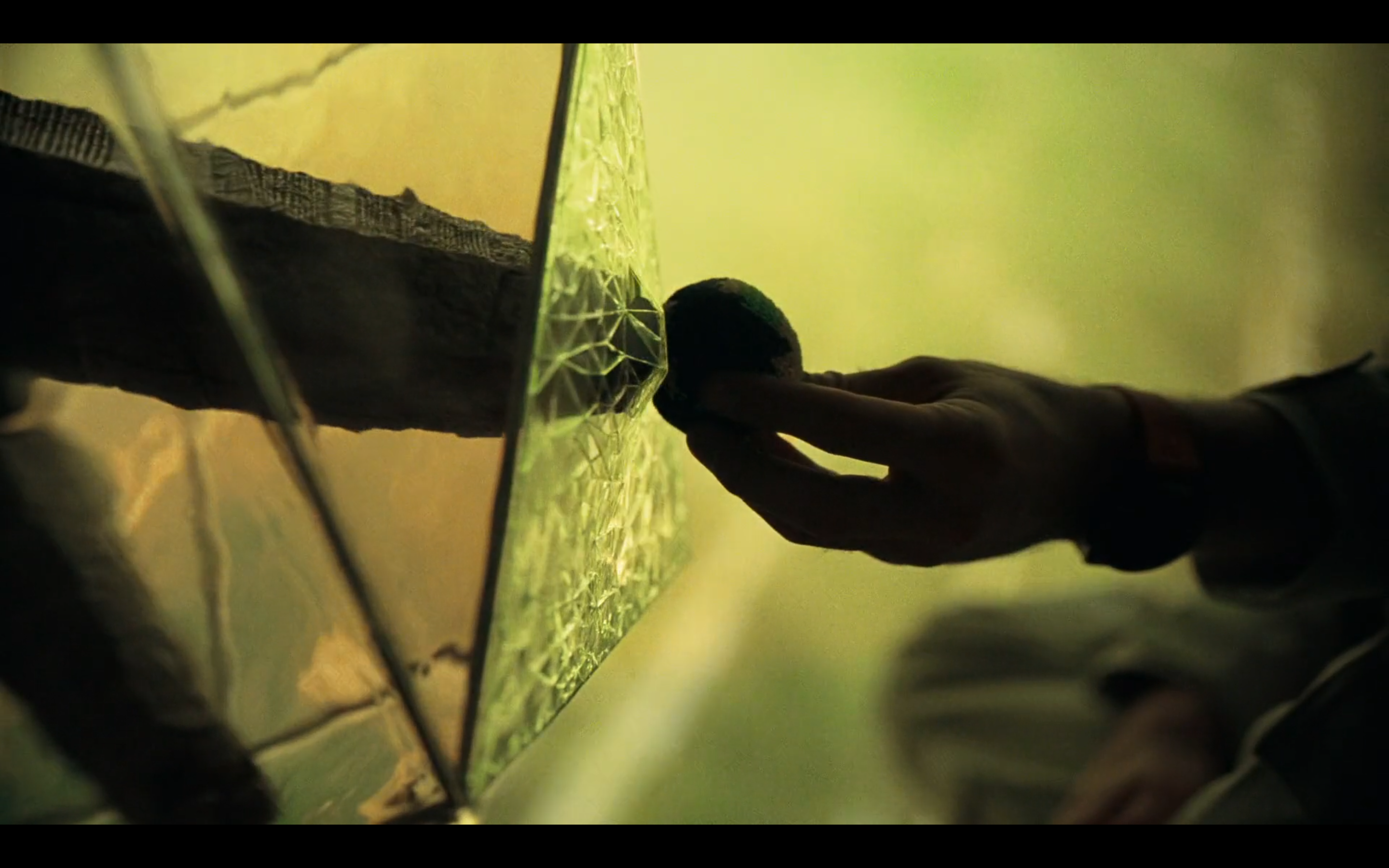
É nesse sentido que Devoradores de Estrelas toca, talvez sem querer, nas ideias do filósofo Bruno Latour: num planeta sugado até o último lampejo pelos globalizadores (os “de cima”), resta a esse desterrado “de baixo” encontrar um outro lugar para aterrar. Quando Grace (a graça, essa ideia abstrata e impalpável) e Rockie (a rocha, matéria-prima de quase todos os mundos) passam a dividir um mesmo planeta, a capa protetora que permitia a sobrevivência de Rockie na nave humana se torna uma redoma que envolve a nova atmosfera de Grace. Nessa nova Terra, longe da incomunicabilidade humana, o cientista volta a ser professor, mas a sala de aula é separada por essa tela intrincada, interface entre dois tipos de existências que sonham um lugar em comum. Uma tela paradoxal, que, em sua natureza fílmica, vive a dicotomia entre a imagem fotográfica e a digital, mas, em sua diegese, contrapõe corpos, sujeitos, mundos diante de si e não mais diante de uma imagem do mundo (feita sabe-se lá como). Nessa aventura espacial ingênua (e, às vezes, excessivamente humorada), Hollywood desterra ET para driblar cinismos e pessimismos e retomar uma certa noção spielbergiana de que, para sonhar com outros mundos, é preciso sonhar antes o outro, aquilo que, a linguística ensina, sempre existe no contraponto e na diferença a nós mesmos. Na imagem síntese, voltamos ao encontro dos dedos; desta vez com o pequeno globo de crochê convergindo as duas mãos.
Project Hail Mary: E.T., phone, our home
by Álvaro André Zeini Cruz
“E.T. phone home.” That is the pinnacle of linguistic mastery achieved by the alien created by Steven Spielberg in the classic E.T. the Extra-Terrestrial. It doesn’t mean that E.T. doesn’t communicate with the other “extraterrestrial” in the film — the boy Elliott Taylor, whose loneliness finds a parallel in the creature’s circumstance of being left behind. On the contrary, if the film exists and moves us, it’s because the two E.T.s develop, beyond language, a language of their own among so many possible ones. The synthesis of this communication — from the etymology “to make common” — occurs through light, the raw material that has fascinated Spielberg since childhood (as we saw in The Fabelmans) and that springs from E.T.’s long, slender index finger before meeting Elliott’s finger. The luminous magic represents an extraordinary and unique language for the two of them, clandestine in the closet, while, next door, the mother shares with a young Drew Barrymore the most banal of enchantments: she narrates Peter Pan, running her eyes over the letters of a book.
If Roland Barthes says that language is fascist in its closed codes, which connote the detention of power, he also argues that there is a way to cheat it, in a “magnificent deception that allows us to hear language outside power, in the splendor of a permanent revolution of language,” which Barthes calls “literature.” It appears mirrored in the scene from E.T.: experienced by the little girl, who deludes herself into Neverland, and by her brother, who, blessed by childhood (the gift we lose and spend our whole lives trying to regain), witnesses the fantastic before him. At the climax, to help E.T. leave this harmful planet, Elliott and his friends fly on their bicycles, but only to break free from the greed of men and take a shortcut to the spaceship. In the film I will now discuss, the greed of men is unavoidable and erases, all at once, the raw material of life and this simulacrum called cinema. In Project Hail Mary, Elliott Taylor remains lonely, but he has grown up. And, faced with the failure of earthly connections, all that remains for him is to go to space.
Here, Elliott is Grace (Ryan Gosling), the grace upon which humanity depends in a film whose original title, Project Hail Mary, means exactly that. Obviously, it’s not Spielberg’s character, but it’s as if it were, as he continues to have communication difficulties except when connected to childhood, to the students he interacts with daily as a teacher. It is in the classroom that he maintains the theater of belief in humanity, trying to delude the children with a light at the end of the tunnel. It is there that he is co-opted by Eva Stratt (Sandra Hüller), precisely because, in the past, he did what is expected of scientists — he challenged science so that it does not become an airtight truth and evolves not linearly, but in fits and starts. In Project Hail Mary, a microorganism extinguishes the light of the sun and other stars. Humanity, therefore, needs a jolt to survive, and no one is better suited than this guy, who acts with those who are in the midst of constructing knowledge (the children) and challenges those who think they possess it (the adults). When, in the classroom, Dr. Stratt picks up a small toy globe, Grace warns — “careful, it’s lava” — to which she pragmatically replies: “no, it’s not.” A black hole is established between those who believe in langue, the hard coding, and those who prefer parole, that creative deception capable of being reinvented only in otherness.
The issue is that the people of langue are treacherous, and to survive, they get the poor teacher into a fix: Grace is promoted to astronaut against his will, and when the film begins, he awakens in a loneliness that goes from figurative to literal. And although the plot disproves his hypothesis that life is independent of water, it nevertheless supports the even more basic premise that life exists outside Earth. It is this superhuman belief that leads him to contact — first physical (through a tunnel) rather than symbolic — with a spaceship made of lines that seem to materialize the speed of light seen in the Star Wars films. It is from the transit between science fiction and the fantastic that Rocky emerges, a creature that seems to precede Spielberg’s E.T., whose body had organic contours and earthy filling. Even more primitive, Rocky is a pile of rough, uncut stones. But Grace discovers that those who have the gift of dreaming can communicate with anyone, even with a pile of stones that emit long squeaks.
A subplot unfolds that makes Villeneuve’s Arrival seem even more pretentious; what was a whole film there becomes here a sequence in which translation is a mere auxiliary device to storytelling (languages related through referents), which is established mainly through other means, above all through a truth made common: darkness condemns earthlings and extraterrestrials to death. Life thus becomes a utopia shared by these two representatives of different species, who guard each other’s sleep, as if returning to the caves (and haven’t they?!). The adventures from there on are classic flights between suspense and deadlines, with the difference that, although it chews on films like 2001: A Space Odyssey and Alien, the interest here is to devour the adventure film as a primordial genre, placed in space in a contemporaneity where, symbolically, lava yields in its luminance and where Earth becomes an opaque body, without reflective surfaces. Stratt was right: it’s not lava, it’s a planet made of toy, in the breadth of that idea.
It is in this sense that Project Hail Mary touches upon, perhaps unintentionally, the ideas of the philosopher Bruno Latour: on a planet sucked dry of its last glimmer by globalizers (the “upper classes”), all that remains for this exiled “lower class” is to find another place to land. When Grace (grace, that abstract and impalpable idea) and Rocky (the rock, the raw material of almost all worlds) come to share the same planet, the protective cover that allowed Rocky to survive in the human ship becomes a dome that envelops Grace’s new atmosphere. On this new Earth, far from human incommunicability, the scientist returns to being a teacher, but the classroom is separated by this intricate screen, an interface between two types of existences that dream of a common place. A paradoxical screen, which, in its filmic nature, lives the dichotomy between photographic and digital images, but, in its diegesis, opposes bodies, subjects, worlds facing each other and no longer facing an image of the world (made God knows how). In this naive (and sometimes overly humorous) space adventure, Hollywood exiles E.T. to circumvent cynicism and pessimism and to reclaim a certain Spielbergian notion that, to dream of other worlds, one must first dream the other, that which, linguistics teaches, always exists in counterpoint and in difference to ourselves. In the synthesis image, we return to the meeting of fingers; this time with the small crocheted globe converging two hands.

