
por Álvaro André Zeini Cruz
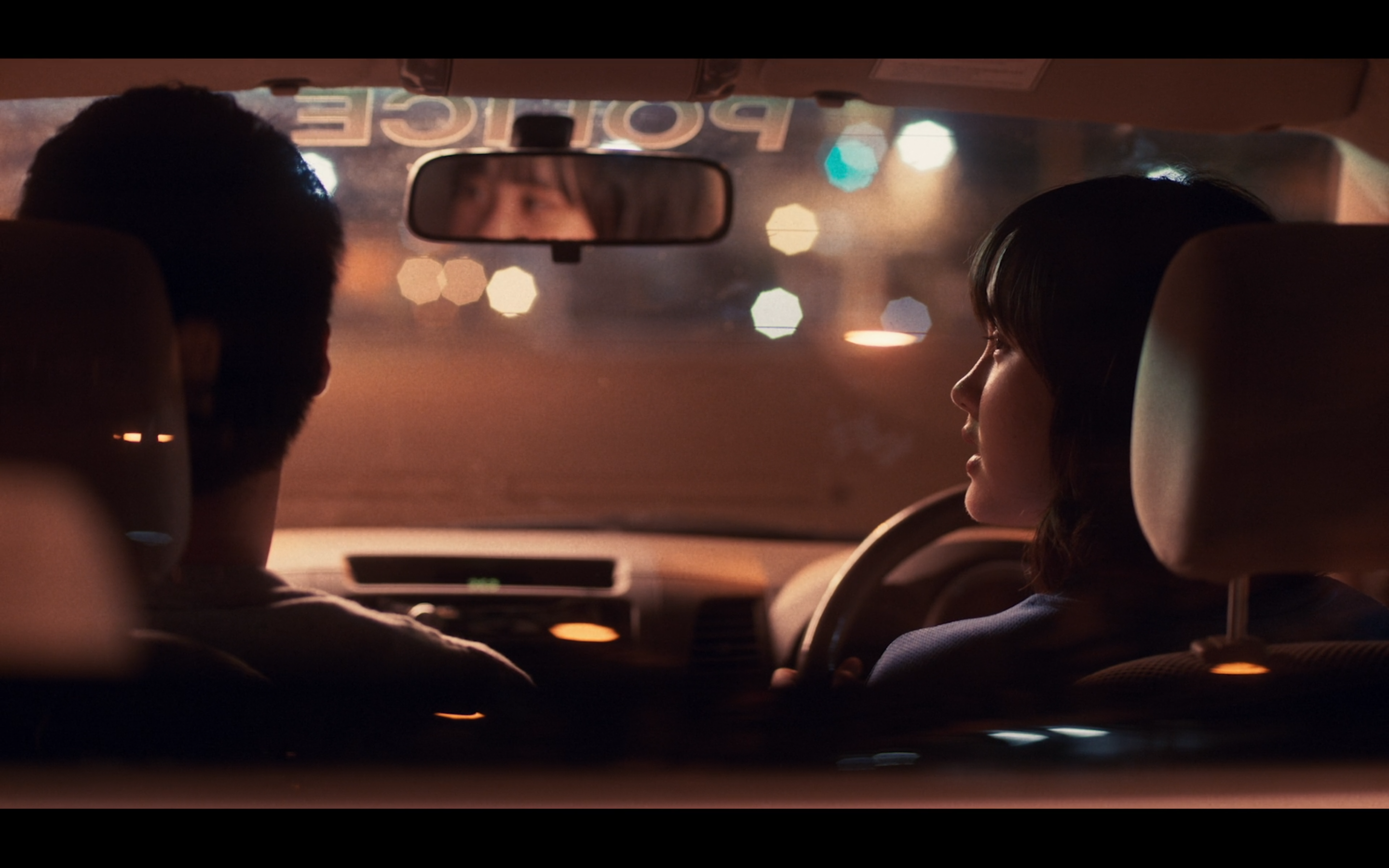
Jane (Kirana Pipityakorn) tem aulas de direção na camionete de Tong (Pakor Chadborirak), enquanto a melhor amiga Ann (Fatima Dechawaleekul) os acompanha na carroceria do veículo. A amizade entre essas adolescentes vive dias escorregadios desde que ambas passaram a sentir uma atração oculta entre testes e inconfissões até culminar num beijo (não mais entre os cílios, como elas brincavam, mas entre as bocas). Tong, um policial por volta dos 30, se intromete sem querer nessa relação, compondo uma triangulação em que a solidão dele as atrai de alguma forma, por motivos diferentes e não evidentes. Esse subtexto todo encontra síntese no olhar de Jane, talvez o mais complexo visto num melodrama desde que Gwyneth Paltrow nos olhou — apesar da sombra e dos cabelos sobre o rosto — em Amantes, de James Gray. Jane para no semáforo e brinca de cutucar Tong; “você tem bochechas macias”, ela diz a ele, enquanto a câmera muda a distância focal para borrá-los, destacando o olhar desconcertado de Ann não em direção a Tong, mas a Jane. Não, por mais dolorido que seja, não é esse o olhar ambíguo, que suspende para sempre a verdade daquelas relações. Ele vem no contracampo visto da carroceria (provável subjetiva de Ann), quando Jane vira o rosto para ver Tong, mas o mantém no limiar do “rabo de olho olhar para trás”, como se um vetor invisível partisse de sua visão lateral para convocar Ann. Na denotação, ela olha para Tong, mas a mise en scène nunca é pura denotação; pelo contrário, vive das brechas, dos limiares, dos subtextos. Nesse nosso vislumbre sobre Jane, podemos flagrar — se nossos olhos estiverem abertos — a tentativa dela de espiar Ann para saber se é retribuída, se também é olhada. É o último lampejo dessa adolescência compartilhada num slice of life cuja música melodramática soa, por um bom tempo, intrusa.
Então, o melodrama irrompe, pondo abaixo os dias em que a quadra de badminton — enfiada entre edificações precárias — recebia alguma luz do sol. Jane, Ann e Tong habitam esse condomínio de pixações e puxadinhos, destinado a policiais e suas famílias. Cada qual tem seu drama, mas o de Ann é basilar: órfã de pai, ela, a mãe viciada em apostas e os irmãos vivem sob a ameaça de despejo. Contam com a intercessão da mãe de Jane, uma espécie de agiota da vizinhança, cujo marido policial, ao que tudo indica, mantém um esquema clandestino de apostas no local. Esse pai quase completamente ausente é o contraponto ao honesto Tong, que se deixa levar pela amizade com as adolescentes, talvez porque diante delas (e só delas) pareça um herói.
Instala-se uma disputa de pequenos poderes, em que a luta de classes invade a mesma vizinhança e toma maternidades não tão distantes assim. A crise, obviamente, atinge os afetos e afazeres negociados entre as garotas, que, ao deixarem de se reconhecer, são lançadas a um coming of age forçado; não é à toa que a intriga adolescente se transforma numa bola de neve de gente grande, que levanta névoa acerca da natureza daquelas relações (o interesse de Jane por Tong envolve descobrir ou recalcar sua sexualidade? Ann chega a ter com ele uma relação romântica ou nutre simplesmente uma projeção pragmática de garantir um teto?). No alicerce das crises, ou seja, invisível, há uma falência das masculinidades, que vai abrindo as rachaduras entre essa vizinhança, fazendo com que as mães desmoronem sobre as filhas a ponto de sabotarem a ancoragem que elas construíram entre si.
Entre sacadas de cobogós modestos, fios que correm em meadas à vista e parabólicas que despontam petulantes entre o vão dos blocos, a cineasta Jirassaya Wongsutin tece, tijolo a tijolo, essa trama de amigas geniais que perdem um amor possível na tessitura desse bloco de dias em que o céu da adolescência é tragado pela vida adulta. Ann desconta nos vasos, o pouco que há de decorativo naquele ambiente de mulheres suspensas à margem dos companheiros; homens promotores da ordem que, ironicamente, só progridem e saem dali quando agem à beira da lei. Tong nota que esse é seu único caminho quando descobre que o piano da filha existe não por conta dele (e só inexiste quando está no extracampo da chamada de vídeo). Já Jane, quando cai em si, agarra no pulso de Ann e é puxada para a Disney que lhes é possível (numa cena que remete ao final de Projeto Flórida). A bordo de um barco luminoso, tenta retomar a mais brilhante das alianças com um pedido de casamento simbólico. Descobre que vão-se os dedos e ficam os anéis: fecham os olhos juntas, mas quando Jane os abre, Ann, a amiga das cicatrizes ocultas, não a olha mais. Torna-se literalmente invisível nesse filme sobre ver e não ver.
Flat Girls
by Álvaro André Zeini Cruz
Jane (Kirana Pipityakorn) takes driving lessons in Tong’s (Pakor Chadborirak) van, while her best friend Ann (Fatima Dechawaleekul) rides along in the back. The friendship between these teenagers has been on shaky ground ever since they both began to feel a hidden attraction amid tests and unspoken confessions, culminating in a kiss—no longer between the lashes, as they used to joke, but on the lips. Tong, a policeman in his thirties, unintentionally intrudes into this relationship, creating a triangle in which his loneliness attracts them somehow, for different and not immediately obvious reasons. This entire subtext finds its synthesis in Jane’s gaze—perhaps the most complex seen in a melodrama since Gwyneth Paltrow looked at us (despite the shadow and hair falling over her face) in James Gray’s Two Lovers. Jane stops at a traffic light and playfully pokes Tong. “You have soft cheeks,” she tells him, as the camera shifts its focal length to blur them, highlighting Ann’s disconcerted look—not toward Tong, but at Jane. No, painful as it may be, that is not the ambiguous gaze that forever suspends the truth of those relationships. It comes in the reverse shot from the back of the van (likely Ann’s point of view), when Jane turns her face to look at Tong but keeps it on the threshold of a “sideways glance looking back”—as if an invisible vector emanated from her peripheral vision to summon Ann. In denotation, she looks at Tong, but mise en scène is never pure denotation; on the contrary, it thrives on gaps, thresholds, and subtexts. In this glimpse of Jane, we can catch—if our eyes are open—her attempt to spy on Ann, to see if she is being watched back, if she too is being looked at. It is the last spark of that shared adolescence in a slice of life whose melodramatic music sounds intrusive for quite some time.
Then, melodrama erupts, shattering the days when the badminton court—wedged between dilapidated buildings—used to catch any sunlight. Jane, Ann, and Tong live in this graffiti-covered, makeshift condominium meant for police officers and their families. Each has their own drama, but Ann’s is fundamental: fatherless, she, her gambling-addicted mother, and her siblings live under the threat of eviction. They rely on the intervention of Jane’s mother, a kind of neighborhood loan shark whose policeman husband, it seems, runs an illegal gambling operation on the side. This almost entirely absent father is the counterpoint to the honest Tong, who gets swept up in his friendship with the teenage girls—perhaps because in their eyes (and only theirs) he appears to be a hero.
A power struggle takes hold, as class conflict invades the same neighborhood and reaches maternity wards not so far away. The crisis, of course, affects the affections and shared responsibilities between the girls, who, ceasing to recognize each other, are thrown into a forced coming of age. It is no coincidence that teenage intrigue snowballs into a grown-up mess, raising questions about the nature of those relationships: does Jane’s interest in Tong involve discovering or repressing her sexuality? Does Ann have a romantic relationship with him, or is she merely pursuing the pragmatic goal of securing a roof over her head? At the root of the crises—invisibly—lies a breakdown of masculinities, which opens cracks in this neighborhood, causing mothers to crumble onto their daughters to the point of sabotaging the anchor the girls had built between themselves.
Between balconies with modest cobogó bricks, wires running in exposed skeins, and satellite dishes that boldly emerge from the gaps between the blocks, filmmaker Jirassaya Wongsutin weaves, brick by brick, this tapestry of brilliant friends who lose a possible love in the weave of those days when the sky of adolescence is swallowed by adult life. Ann takes it out on the flowerpots—the little that is decorative in that environment of women suspended on the margins of their partners; men who promote order and, ironically, only progress and leave when they act on the edge of the law. Tong realizes that this is his only way out when he discovers that his daughter’s piano exists not because of him (and only ceases to exist when it is outside the frame of the video call). Jane, when she comes to her senses, grabs Ann’s wrist and is pulled into the Disney that is possible for them (in a scene reminiscent of the ending of The Florida Project). Aboard a luminous boat, she tries to reclaim the brightest of rings with a symbolic marriage proposal. She discovers that the fingers are gone, but the rings remain: they close their eyes together, but when Jane opens hers, Ann—the friend with the hidden scars—no longer looks at her. She literally becomes invisible in this film about seeing and not seeing.

