
por Álvaro André Zeini Cruz
Em Parábolas Cristãs no século da imagem, Ismail Xavier corre no compasso de Forrest Gump para, no movimento relativo, tornar estacionário o movediço filme de Robert Zemeckis. Emparelhado, Xavier disseca a existência do campeão americano para encontrar em Forrest Gump a celebração de um american way of life cristalizado, industrializado e distribuído pela reprodutibilidade técnica que escamoteia a verdadeira natureza desse modo de vida: é uma réplica morta, sintetizada pela pluma branca inerte que, reavivada pelo vento, abre e fecha o filme.
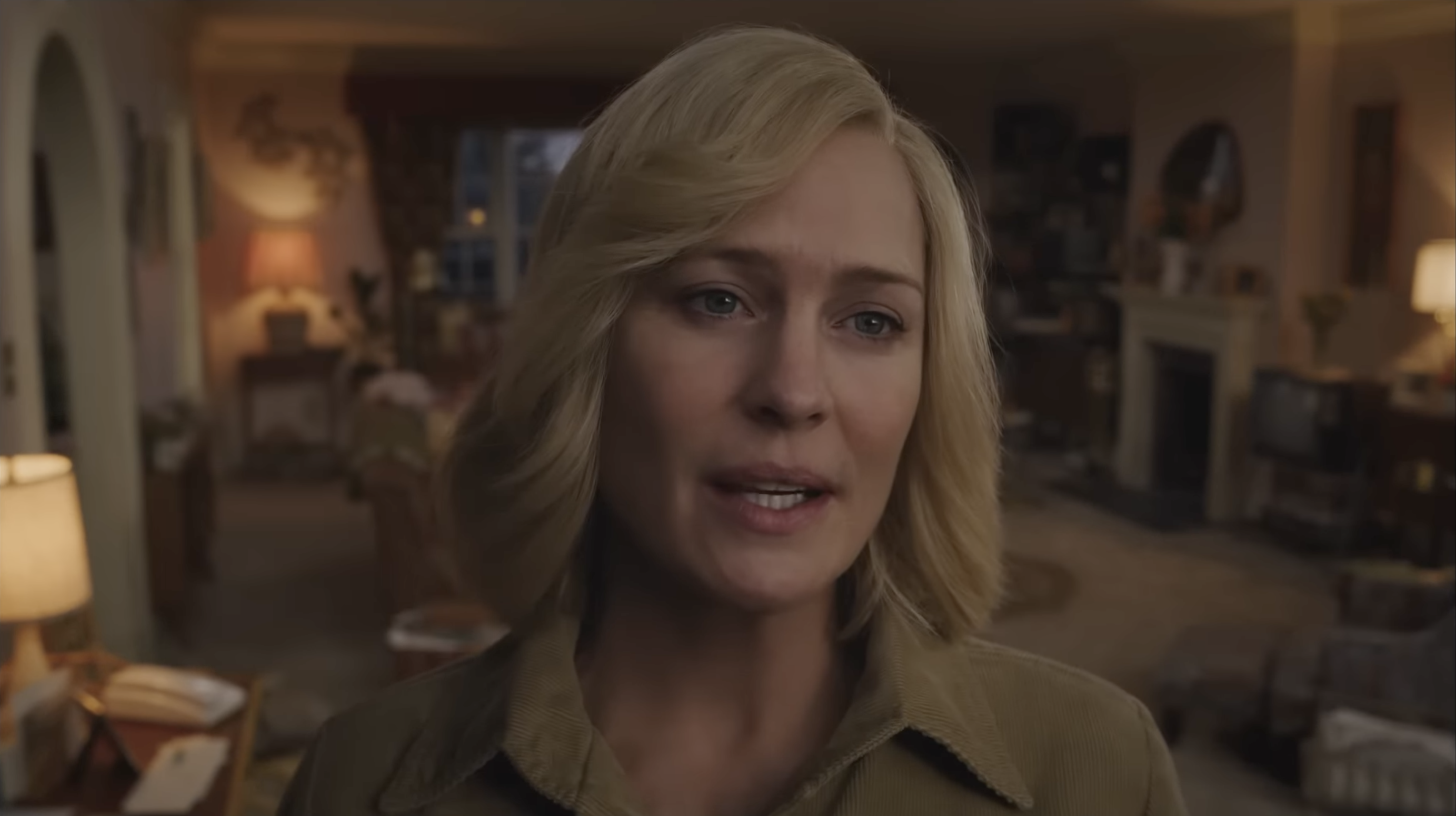
Trinta anos depois, Zemeckis reescala Tom Hanks e Robin Wright, estrelas de Forrest Gump, para protagonizarem uma espécie de contra-filme. Desta vez, a ficção não percorre os Estados Unidos, tampouco se assenta no classicismo griffithiano; ela parte de um dispositivo quase teatral. “Quase” porque, apesar de se estabilizar em uma determinada perspectiva, o olhar ocupa um ponto de vista privilegiado na sala de estar de uma casa, mas, principalmente, porque não se detém num determinado tempo. É pela trucagem cinematográfica que, a partir dessa vista ancorada, se inicia uma viagem histórica pela vida doméstica estadunidense, mas não só; passam por aquele recorte espacial os povos originários e, bem antes deles, os dinossauros. Nesse sentido, é um filme que remete à Árvore da Vida de Terrence Malick, só que com um olhar rigorosamente oposto, pois não é pelo balançar da câmera que somos lançados entre eras, mas pela porosidade da imagem principal, por sua capacidade de parir novas margens e preenchimentos, novas formas e fundos.
Zemeckis parte de uma premissa existencialista de que não existimos simplesmente, mas existimos em certos espaços e tempos, em determinados contextos. Outros já estiveram no exato ponto em que criamos raízes e, consciente da contradição trágica dessa metáfora (humanos só podem criar raízes impalpáveis ou artificiais), Zemeckis enraíza a casa, extensão humana inanimada, animada pelas vidas ocupantes, cujas energias e marcas são sempre voláteis. Cores, estilos, mobílias mudam entre janelas que se abrem em meio ao quadro principal, instituído como um plano paradoxal: robusto na rigidez do ponto de vista, fragilizado por esses sobreenquadramentos, que, sem sobreaviso, rasgam abismos condutores a outras imagens. O dispositivo teatral cede à mágica cinematográfica, a mesma usada por Zemeckis (e tantos outros antes e depois dele) para criar ilusões de vidas plenas. Permanece a convergência entre essas duas artes: a impossibilidade de observar vidas inteiras e, consequentemente, a necessidade de se contentar com esses fragmentos vitais, que se vinculam a nós pela reencenação dos conflitos e sofrimentos. Aqui o aviador morre de gripe, a faxineira morre de Covid, o desenhista morre no sonho. A mãe tem um AVC e resta ao pai o sofá-cama, que caracteriza a transferência geracional dessa casa não quista, porque a personagem de Robin Wright — cuja personagem, em Forrest, explorara o mundo —, sobrevive sonhando com outra casa, mas, Aqui, está encarcerada, fadada a viver das sobras, das não-realizações, dos esquecimentos. Acaba, mais uma vez, castigada.
Se, por um lado, os quadros dão à luz a outras imagens, por outro, são impiedosos no apagamento da imagem anterior, na imposição do “não mais Aqui”. O artifício imagético, o uso da IA rejuvenescedora, os nacos de sobrevidas retratados convergem a esse “não existir” por “não estar aqui”. A morte emerge como mediania incontornável e onipresença verdadeira, clímax que encerra as mediocridades farsescas, os pequenos teatros performados para ninguém além da terra em que se pisa (sob o recalque da incapacidade de criar raízes reais). O vôo ressurge como motivo: Aqui, o beija-flor toma o lugar da pena morta, mas, assim como o movimento de câmera final, é uma inverdade evidente, outra imagem que se abre como os quadros invasores, assinalando a existência de um enquadramento maior, um recorte que esconde as linhas do titereiro. Em Forrest Gump, Zemeckis pregava que o cinema era a vida (ou, pelo menos, um tipo de vida). Em Aqui, lembra que é da natureza da imagem não estar aqui. Portanto, o cinema é uma mentira entre janelas abertas. Tal qual a vida, essa essência dependente de existir entre janelas de espaço e tempo, cuja verdade, talvez, só se encontre nos lampejos causados no movimento derradeiro — o dos fechamentos, que, inevitavelmente, culminam em não estar.
Here
by Álvaro André Zeini Cruz
In Christian Parables in the Age of the Image, Ismail Xavier runs in step with Forrest Gump in order to, through relative motion, render stationary the fluid film by Robert Zemeckis. Working in tandem, Xavier dissects the existence of the American champion to find in Forrest Gump the celebration of an American way of life crystallized, industrialized, and distributed by technical reproducibility, which obscures the true nature of that way of life: it is a dead replica, synthesized by the inert white feather that, reanimated by the wind, opens and closes the film.
Thirty years later, Zemeckis reassembles Tom Hanks and Robin Wright, stars of Forrest Gump, to lead a kind of counter-film. This time, the fiction does not traverse the United States, nor does it rest on Griffith-like classicism; it departs from an almost theatrical device. “Almost” because, although it stabilizes in a fixed perspective, the gaze occupies a privileged viewpoint in a house’s living room, but mainly because it does not linger in a fixed time. It is through cinematic trickery that, from this anchored view, a historical journey through American domestic life begins, and not only that; passing through that spatial frame are the indigenous peoples and, long before them, the dinosaurs. In this sense, it is a film that recalls Terrence Malick’s The Tree of Life, only with a strictly opposite gaze, for it is not through the camera’s sway that we are launched between eras, but through the porosity of the main image, through its ability to give birth to new margins and fillings, new forms and grounds.
Zemeckis starts from an existentialist premise that we do not simply exist, but exist in certain spaces and times, in specific contexts. Others have been at the exact point where we put down roots, and aware of the tragic contradiction of this metaphor (humans can only put down intangible or artificial roots), Zemeckis roots the house, an inanimate human extension, animated by the occupying lives, whose energies and marks are always volatile. Colors, styles, furnishings change between windows that open within the main frame, established as a paradoxical shot: robust in the rigidity of the point of view, yet fragile due to these embedded frames that, without warning, tear open chasms leading to other images. The theatrical device yields to cinematic magic, the same used by Zemeckis (and so many others before and after him) to create illusions of full lives. What remains is the convergence between these two arts: the impossibility of observing whole lives and, consequently, the need to be content with these vital fragments, which connect to us through the reenactment of conflicts and sufferings. Here the pilot dies of the flu, the cleaner dies of Covid, the draftsman dies in a dream. The mother has a stroke, leaving the father with the sofa-bed, which characterizes the generational transfer of this unwanted house, because the character played by Robin Wright — whose character in Forrest had explored the world — survives by dreaming of another house, but, in Here, she is imprisoned, doomed to live on leftovers, unfulfilled dreams, and forgotten things. She ends up, once again, punished.
If, on one hand, the frames give birth to other images, on the other, they are merciless in erasing the previous image, imposing the “no longer Here.” The imagistic artifice, the use of rejuvenating AI, the depicted chunks of afterlives all converge on this “not existing” through “not being here.” Death emerges as an inescapable mediation and true omnipresence, a climax that concludes the farcical mediocrities, the little theaters performed for no one but the ground underfoot (repressing the inability to put down real roots). Flight resurfaces as a motif: in Here, the hummingbird takes the place of the dead feather, but, like the final camera movement, it is an evident untruth, another image that opens like the invasive frames, signaling the existence of a larger framing, a cut that hides the puppet master’s strings. In Forrest Gump, Zemeckis preached that cinema was life (or at least a kind of life). In Here, he reminds us that it is in the nature of the image not to be here. Therefore, cinema is a lie between open windows. Just like life, this essence dependent on existing between windows of space and time, whose truth, perhaps, is only found in the flashes caused by the ultimate movement — that of closures, which inevitably culminate in not being.
 Pós-créditos